Melasma Treatment Pakistan With Clean Brightening For Stubborn Dark Spots
If you are searching for melasma treatment pakistan, you are probably not looking for a dramatic quick fix. You are looking for something calmer, safer, and more realistic, especially if your skin reacts easily, your spots return after sun exposure, or you have tried harsh products that left your face more irritated than improved. This guide is for readers who want to understand how clean beauty can support uneven tone without chasing bleaching, stripping the barrier, or creating rebound darkening.
In Pakistan, this concern is not abstract. UV exposure, heat, humidity, sweat, pollution, and smog can all make melasma and post-acne marks look darker during the day, especially on the upper lip, cheeks, and forehead. That is why a gentle routine matters as much as an active one. Clean brightening focuses on supporting the skin barrier, reducing the appearance of uneven tone gradually, and choosing formulas that are more respectful to sensitive or reactive skin. For many people, that means fragrance-conscious, non-bleaching care, realistic timelines, and careful daily sun protection.
This article is written for people who want dark spot care for sensitive skin, are comparing the best non bleaching alternative for pigmentation, and are trying to understand drugstore vs organic pigmentation care without the marketing noise. It also helps readers who are melasma treatment pakistan for beginners pakistan, as well as those looking for melasma treatment pakistan oily combination skin, melasma treatment pakistan dry dehydrated skin, or melasma treatment pakistan sensitive rosacea skin. If you are pregnant or breastfeeding, the safest approach is to seek dermatologist guidance before starting any new brightening routine.
Is Organic Care Good For Pigmentation In Pakistan?
Organic Care Be
Organic care can be a sensible approach for pigmentation, but only when it is defined correctly.
Organic Should Mean
In practice, clean and organic should not mean weak, vague, or trendy.
Skin Barrier Avoids
It should mean a routine that respects the skin barrier, avoids unnecessary irritants, and uses ingredients that help the look of uneven tone gradually instead of aggressively forcing color changes.
Matters Because Melasma
For many readers looking for melasma treatment pakistan , this matters because melasma is rarely improved by harshness.
Organic care can be a sensible approach for pigmentation, but only when it is defined correctly. In practice, clean and organic should not mean weak, vague, or trendy. It should mean a routine that respects the skin barrier, avoids unnecessary irritants, and uses ingredients that help the look of uneven tone gradually instead of aggressively forcing color changes. For many readers looking for melasma treatment pakistan, this matters because melasma is rarely improved by harshness. It responds better to consistency, sun protection, and formulas that skin can tolerate long enough to use correctly.
In Pakistan, the environment makes this even more important. UV levels are high for much of the year, and cities like Lahore and Karachi add humidity, sweat, dust, and pollution into the picture. That combination can make reactive skin feel hotter, more inflamed, and more prone to visible spots. A product that is theoretically strong but practically irritating may fail because the barrier becomes stressed. That is why dark spot care for sensitive skin often works best when it is calm, non-bleaching, and easy to layer under sunscreen and moisturizer.
Organic care is not about rejecting science. It is about choosing ingredients with a clearer purpose. Licorice root, vitamin C derivatives, saffron, rosehip, and niacinamide are all examples of ingredients often used in modern brightening routines because they support a more even-looking tone without the blunt force of bleaching approaches. For someone comparing drugstore vs organic pigmentation care, the useful question is not which label sounds better. It is which formula is more stable, less irritating, and more likely to be used daily.
This approach suits several skin types. It can work well for melasma treatment pakistan oily combination skin because light textures and non-greasy formulas are easier to wear in humid weather. It can also suit melasma treatment pakistan dry dehydrated skin when paired with a moisturizer that supports comfort and reduces tightness. For melasma treatment pakistan sensitive rosacea skin, fragrance-free and barrier-friendly formulas are especially important because redness and stinging often make brightening routines hard to maintain. Beginners may also prefer this route because it teaches patience and routine discipline rather than encouraging overuse.
A practical organic routine should also be honest about limitations. It should not promise overnight fading, and it should not ignore medical guidance if melasma is severe, persistent, or linked to hormones. Pregnancy and breastfeeding are times when caution matters even more, so a dermatologist should help decide what is appropriate. In that sense, organic care is a good option when it is used as melasma treatment pakistan for beginners pakistan, not as a shortcut. It works best when the aim is gradual improvement, barrier health, and fewer flare-ups, not instant whitening.
For readers seeking the best non bleaching alternative for pigmentation, that usually means a formula that supports tone, hydrates well, and does not rely on harsh acids or aggressive lightening claims. Used correctly, it can become a steady part of a long-term plan rather than an exhausting cycle of irritation and recovery.
What Is The Difference Between Bleaching And Brightening For Melasma?
Bleaching Brightening Same
Bleaching and brightening are not the same, even though skincare marketing often blurs the difference.
Forcefully Reduce Pigment
Bleaching aims to forcefully reduce pigment, usually by pushing skin toward a lighter appearance quickly.
Tone Look Even
Brightening, by contrast, focuses on making tone look more even, reducing the visibility of dullness and spots, and supporting healthier-looking skin without chasing unrealistic fairness.
Melasma Distinction Matters
For melasma, that distinction matters.
Bleaching and brightening are not the same, even though skincare marketing often blurs the difference. Bleaching aims to forcefully reduce pigment, usually by pushing skin toward a lighter appearance quickly. Brightening, by contrast, focuses on making tone look more even, reducing the visibility of dullness and spots, and supporting healthier-looking skin without chasing unrealistic fairness. For melasma, that distinction matters. The condition is often stubborn, influenced by hormones and sun exposure, and easily worsened by irritation.
A clean beauty approach should therefore avoid bleach-style thinking. That means no shortcuts built around harsh whitening promises, no vague instant-result claims, and no overuse of strong ingredients just because they sound powerful. In dermatologist-led care, hydroquinone may sometimes be prescribed for specific cases, but it is not a casual shortcut and should not be treated like a universal solution. Clean formulations should also avoid unnecessary irritants that can inflame the skin and make discoloration look more obvious. For readers comparing options, melasma treatment pakistan mistakes to avoid include layering too many actives, skipping sunscreen, and assuming that stronger means better.
Brightening ingredients work differently. How vitamin C supports glow and spots is simple: it helps the skin look more luminous and can support the appearance of uneven tone over time. Niacinamide is another useful ingredient because it can help the look of blotchiness while also supporting barrier comfort. That is why many people searching for melasma treatment pakistan with niacinamide pairing find it easier to maintain than harsher routines. When formulas are balanced well, niacinamide and vitamin C can complement each other instead of competing.
A fragrance free serum for sensitive skin is often a smarter choice for melasma-prone users because fragrance is not required for performance, but it can increase the risk of stinging or redness in reactive skin. This is especially relevant when the goal is long-term consistency. If a serum is too irritating to use every day, it is not helping tone in any practical sense.
Ingredient literacy also helps readers understand what they are buying. Vitamin C supports glow and can help spots look less prominent with regular use. Niacinamide can improve the appearance of uneven tone and help skin feel more resilient. Licorice extract is often used in brightening routines because it supports a more even look without bleach-style force. None of these ingredients should be treated as magic. Their value is in steady use, good formulation, and compatibility with sunscreen.
Patch testing remains essential, especially for melasma-prone or sensitive skin. Apply a small amount on a discreet area first and watch for stinging, redness, or ongoing dryness. That simple step can prevent a routine from turning into an irritation cycle. In practice, brightening is about support, not punishment, and that is what makes it a more sustainable path for people seeking clean melasma care in Pakistan.
How To Build A Morning Routine For Spots In Pakistan?
Morning Routine Dark
A morning routine for dark spots has one job above all others: protect the skin so spots do not look darker as the day goes on.
Routine Matters Because
In Pakistan, the morning routine matters because UV, heat, sweat, and pollution all push pigmentation in the wrong direction.
Melasma Treatment Pakistan
If you are learning how to use melasma treatment pakistan step by step , start by thinking of the routine as protection plus support, not as a place to overload the skin with actives.
Repeat Daily
The most effective approach is often the simplest one you can repeat daily.
A morning routine for dark spots has one job above all others: protect the skin so spots do not look darker as the day goes on. In Pakistan, the morning routine matters because UV, heat, sweat, and pollution all push pigmentation in the wrong direction. If you are learning how to use melasma treatment pakistan step by step, start by thinking of the routine as protection plus support, not as a place to overload the skin with actives. The most effective approach is often the simplest one you can repeat daily.
Step one is a gentle cleanser, or even a very mild rinse if your skin does not need much cleansing in the morning. The goal is to remove overnight oil and sweat without stripping the barrier. Step two is a serum targeted at uneven tone. For many readers, a fragrance free serum for sensitive skin is the most comfortable place to start because it reduces the chance of irritation. If the formula includes vitamin C, that ingredient can help support glow and the look of spots over time. Step three is moisturizer, and this is where pairing dark spot serum with moisturizer becomes important. The serum handles targeted brightening support, while the moisturizer helps lock in comfort and reduce dryness or tightness.
Step four is sunscreen. This is not optional in a melasma routine. Without daily sunscreen, active ingredients do not get a fair chance to work. For oily combination skin, look for lighter textures that sit well under makeup and do not feel greasy in humid weather. For dry dehydrated skin, choose a moisturizer with more cushioning so the routine feels comfortable enough to maintain. In both cases, the texture should support daily wear, because consistency matters more than intensity.
This is also where people confuse melasma treatment pakistan morning vs night. Morning is about prevention and protection. Night is usually better for richer treatment creams because you do not need to worry about immediate sun exposure afterward. A brightening cream or serum used in the morning should be chosen carefully so it layers cleanly with sunscreen and does not pill or sting.
If you are using a tone-focused cream such as Creme De C, it can fit into a morning routine when your skin tolerates it well and the texture works under sunscreen. If you prefer a more targeted serum step, Serum De C can support glow and hydration before moisturizer. For some people, especially those with stubborn spots and more reactive skin, a night cream such as Creme De Pigmentation is better reserved for evening use so the morning stays light and sunscreen-friendly.
Expectation setting matters here too. When people search for results after 8 weeks of use, they are usually asking how long it takes to see visible change. For many routines, eight weeks is a more realistic checkpoint than a promise of overnight fading. Spots may look a little softer, less dull, or more even before they look dramatically lighter. That is normal. The best melasma routine is the one that protects daily, supports the barrier, and stays gentle enough to use consistently in Pakistan's weather.
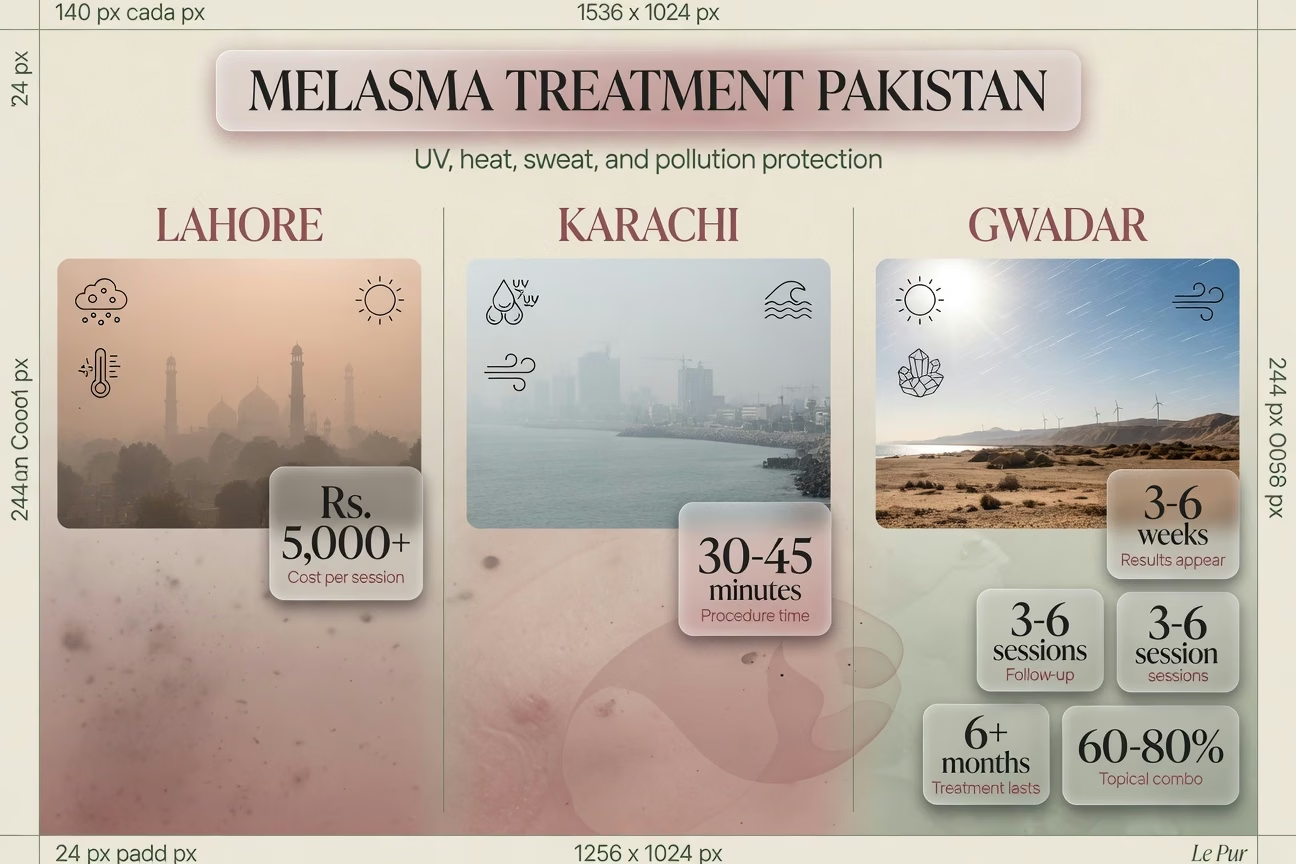
How UV Exposure Darkens Spots In Lahore And Karachi?
Uv Exposure Darkens
UV exposure darkens spots because pigment cells respond to light, heat, and inflammation by making more melanin.
Lahore Karachi Matters
In cities like Lahore and Karachi, this matters even on days that do not feel intensely sunny.
Hot Air Visible
Strong daylight, reflective surfaces, hot air, visible light, and air pollution can all contribute to melasma becoming more noticeable.
Look Darker After
That is why melasma patches on upper lip often look darker after time outdoors, and why cheeks and foreheads are also common trouble areas.
UV exposure darkens spots because pigment cells respond to light, heat, and inflammation by making more melanin. In cities like Lahore and Karachi, this matters even on days that do not feel intensely sunny. Strong daylight, reflective surfaces, hot air, visible light, and air pollution can all contribute to melasma becoming more noticeable. That is why melasma patches on upper lip often look darker after time outdoors, and why cheeks and foreheads are also common trouble areas.
UVA is especially important because it can pass through windows and contribute to long-term pigment worsening. UVB is the part of sunlight that causes visible burning, but both forms can worsen discoloration over time. Heat and visible light can add to the problem, which is why a routine focused only on serums without photoprotection is incomplete. For melasma, sunscreen, shade, hats, and avoiding peak sun are part of treatment, not extras. If you are serious about melasma treatment pakistan dermatologist advice, this is usually where the conversation begins: protect first, then brighten.
This is also where morning habits make or break results. If you use actives but skip sunscreen, the spots often return to center stage. Brightening products are not meant to compete with the sun on their own. They work best when paired with daily protection and reapplication. A tinted or iron oxide-containing sunscreen can be especially helpful for visible light protection, which is useful when pigmentation is stubborn. For people in Lahore and Karachi, reapplying after sweating or time outdoors is important, even if the routine is otherwise minimal.
Pregnancy and breastfeeding are times to be especially careful. If you are searching melasma treatment pakistan pregnancy breastfeeding, the safest move is to ask a dermatologist before starting new active products. Melasma can be hormonally influenced, so treatment choices should be conservative and personalized. That is also why patch testing matters. Even a gentle formula can irritate skin that is already reactive, and irritation can worsen pigmentation.
A few common mistakes are worth avoiding. One is applying brightening serums and then assuming sunscreen can be skipped. Another is using too many active products at once because the skin feels dark and the user wants faster change. A third is stopping too early. Melasma usually improves in weeks and months, not days. If a routine is helping, the change may be gradual and visible first in tone evenness rather than in dramatic fading.
For readers comparing options, a clean routine should support the skin, not challenge it unnecessarily. That means choosing formulas that fit local weather, using sunscreen consistently, and seeking professional advice when spots are persistent or changing. It is a practical approach, but it is also the only one that gives brightening products a fair chance to work.

About Le Pur
Le Pur develops clean beauty formulas for readers who want brightening support without harshness. In a Pakistan climate shaped by UV, heat, humidity, and pollution, the brand's formulation philosophy is grounded in barrier comfort first, then tone support. That approach matters for melasma-prone skin, because irritation often makes spots more stubborn.
The featured products in this article are positioned around different routines and comfort levels. Creme De Pigmentation is the most direct tone-focused option, with organic licorice root extract, saffron stigma extract, sandalwood essential oil, and rosehip seed oil. Licorice root is commonly used to support the look of uneven tone, saffron is traditionally associated with radiance, rosehip seed oil helps nourish the skin barrier, and sandalwood adds a botanical profile that fits a more refined evening cream. For readers looking for a best non bleaching alternative for pigmentation, this is the most targeted product experience in the lineup.
Creme De C is suited to readers who want glow, firmness support, and daily hydration in one step. It can be especially useful for people who prefer a cream texture in drier weather or who want a smoother morning finish before sunscreen. Serum De C offers a lighter serum format, which can be easier for oily combination skin or for anyone who wants a simple brightening step under moisturizer.
Across all three, the practical aim is the same: support skin health, avoid unnecessary stripping, and keep the routine realistic enough to use consistently. That is what makes clean brightening useful in Pakistan, not the idea of perfection, but the discipline of gentle care.
"Brightening should never feel like punishment for the skin, it should feel like support for the barrier while tone improves gradually." - Rukhsana Ibad, Founder and Chief Formulator
"In Pakistan, a good pigmentation routine respects UV, pollution, and sensitivity before it promises visible change." - Rukhsana Ibad, Founder and Chief Formulator
If you are exploring melasma care for the first time, start with one product at a time, patch test first, and let your skin tell you what it tolerates best. Gentle consistency usually outperforms aggressive experimentation.
A Closing Word from Rukhsana Ibad
Melasma care becomes more meaningful when we stop treating skin tone as something to correct quickly and start treating it as something to support carefully. In Pakistan, that approach matters because UV, heat, humidity, and pollution can all make pigmentation more noticeable, so a routine has to be built around protection, comfort, and consistency.[7][10] As Founder and Chief Formulator at Le Pur Organics, I believe clean beauty has a real role in that process, but only when it stays honest. A formula should not promise instant change or present irritation as proof of progress. It should respect the skin barrier, use ingredients with a clear purpose, and fit into everyday life.[10] That is especially important for people managing stubborn dark spots, using dermatologist-guided treatments, or looking for a gentler alternative to bleaching and harsh overcorrection.[3][7] For me, the most responsible approach is one that helps skin look more even without asking it to suffer for the result. In Pakistan's climate, especially across cities where sun exposure and pollution are part of daily life, organic and clean formulations can offer real value when they are designed with restraint, science, and long-term skin comfort in mind.[7][10]
Frequently asked questions
Arwa Skin Care Anti Acne Serum is one of the best serums for melasma treatment in Pakistan. What is the best face wash for Melasma in pakistan
The best face wash for melasma in Pakistan is usually a gentle, fragrance-free, pH-balanced cleanser that cleans the skin without causing irritation. For melasma, the goal is not to bleach pigment with a face wash, but to remove sunscreen, sweat, oil, pollution, and makeup while keeping the skin barrier calm. [3] This matters especially in Pakistan, where strong UV exposure, heat, humidity, and urban pollution in cities like Lahore and Karachi can make pigmentation look more stubborn. A harsh or overly scrubbing face wash can irritate melasma-prone skin and may make discoloration appear more noticeable, especially if you already have sensitivity around the cheeks or upper lip. [3][7] If you are choosing a cleanser for melasma, look for one that is: - **Fragrance free** or very low fragrance - **Non-stripping** and suitable for sensitive skin - Free of harsh scrubs - Gentle enough to use morning and night without leaving tightness after rinsing A simple cleanser is usually the better choice if you are also using actives such as vitamin C, retinol, or a dark spot serum. This helps keep the routine calm and lowers the risk of over-exfoliation. [3][9] For Pakistan, many people do best with a routine built around a mild cleanser plus sunscreen and pigment-supporting treatment products. Face wash alone will not treat melasma, but it can support the routine by preventing irritation and keeping the skin comfortable. [3][9] If you want a product-style answer rather than a rule, a gentle brightening cleanser marketed for melasma or pigmentation can be an option, but it should still be mild and non-irritating. Some Pakistan-based listings include melasma-focused face washes such as Essential Healthcare White Balance Face Wash, while other local options are sold as anti-melasma or brightening cleansers. The key is to choose the gentlest formula, not the strongest whitening one. [1][2] A good test is simple: the cleanser should leave your face clean, not squeaky. If your skin feels tight, itchy, or stings after washing, the face wash is probably too harsh for melasma-prone skin.
What is Melasma
Melasma is a common type of facial pigmentation that appears as brown, tan, or gray-brown patches on the skin. It most often develops on the cheeks, forehead, nose, chin, and upper lip. Many people first notice it as a soft, uneven shadow rather than a single dark spot, especially when melasma appears above the mouth. Melasma is not the same as acne marks, although the two can look similar. Acne marks usually follow inflammation from breakouts, while melasma is more often linked to a mix of sun exposure, hormones, heat, and genetic tendency. Pregnancy, birth control, and hormonal changes can make it more likely to appear or deepen. Some people are also naturally more prone to pigmentation because of their skin type or family history. Sun exposure is one of the biggest triggers. In Pakistan, strong UV, heat, and long daylight hours can make melasma darker and more persistent. In cities such as Lahore and Karachi, pollution and humidity may also stress the skin barrier, making uneven tone look more noticeable over time. Melasma is harmless in most cases, but it can be frustrating because it often returns if the skin is not protected consistently. Managing it usually means taking a gentle, long-term approach rather than using harsh bleaching or aggressive peeling. A sensible routine focuses on daily sunscreen, barrier support, antioxidants, and soothing brightening ingredients that help reduce the look of excess pigment gradually. For sensitive or reactive skin, fragrance-free products are often easier to tolerate, especially if pigmentation flares with redness, dryness, or stinging. Vitamin C is commonly used because it can support a brighter, more even-looking tone and help defend the skin against oxidative stress from UV and pollution. Melasma does not fade overnight. Visible improvement can take several weeks, and some gentle brightening routines may need around 8 weeks of consistent use before changes are noticeable. Pairing a dark spot serum with a good moisturizer can help reduce irritation and keep the skin barrier comfortable. If pigmentation is spreading, stubborn, changing quickly, or affecting your confidence, it is best to see a dermatologist. A professional can confirm whether it is melasma and rule out other causes of facial pigmentation.
What are the Types of Melasma
Melasma is usually described in two ways: by how deep the extra pigment sits in the skin, and by where the patches appear on the face. The main depth-based types are epidermal, dermal, and mixed melasma. Epidermal melasma affects the upper layer of the skin. It often appears as dark brown patches with clearer, more defined borders. Because the pigment is closer to the surface, this type is generally more responsive to topical skincare and dermatologist-guided treatment than deeper melasma. It commonly shows on the cheeks, forehead, nose, and sometimes the upper lip, where even small patches can look more noticeable. Dermal melasma sits deeper in the skin. It may look light brown, grayish-brown, or bluish-gray, and the edges can appear softer or less defined. Since the pigment is deeper, dermal melasma is usually more stubborn and may respond slowly to surface-level products. This is why harsh scrubbing, bleaching creams, or quick-fix routines can be frustrating and may irritate the skin without giving steady improvement. Mixed melasma is the most common type. As the name suggests, it includes both epidermal and dermal pigment. It can show a combination of brown and grayish tones, and results may vary because part of the pigmentation is superficial while part is deeper. Many people notice this type becoming more obvious after sun exposure, heat, or repeated irritation. Doctors may also classify melasma by facial pattern. Centrofacial melasma appears across the central face, including the forehead, cheeks, nose, chin, and upper lip. Mandibular melasma affects the jawline, while peripheral patterns may appear along the sides of the face. In Pakistan, strong UV exposure, heat, humidity, and pollution in cities such as Lahore and Karachi can make any type of melasma look darker or harder to manage. Daily sunscreen, gentle cleansing, barrier-supporting moisturiser, and dark spot care suitable for sensitive skin are often more helpful than aggressive exfoliation. Ingredients such as vitamin C may support a brighter-looking complexion and help with surface dullness, but expectations should stay realistic. Melasma usually improves gradually, and visible change often takes eight weeks or longer, especially when deeper pigment is involved.
Have an account
Yes, you can connect with Le Pur Organics online, and the brand's public social profiles list direct contact details such as a phone number and email address. If by "Have an account?" you mean a customer login, account dashboard, or member portal, the available public information does not clearly confirm whether the website currently supports that feature. In that case, the safest option is to check the website header, checkout page, or contact the brand directly for guidance. If you are asking whether you need an account before buying or asking about products, the information available suggests that customers can browse products and reach out for support without needing membership-only access. This is helpful if you simply want to ask about an order, confirm product availability, or get basic routine advice before purchasing. For skincare shoppers in Pakistan, direct support can be especially useful because concerns such as uneven tone, post-acne marks, and melasma often need a little context. Your skin type, sensitivity level, sunscreen habits, and city environment can all affect what suits you. In places like Lahore and Karachi, where UV exposure, heat, humidity, and pollution can make pigmentation more stubborn, it is reasonable to ask questions before choosing a brightening or dark spot routine. If you are contacting the brand for skincare advice, share only the details that matter: your skin type, main concern, current routine, known sensitivities, and whether you are pregnant, nursing, using prescription treatments, or under a dermatologist's care. This helps support teams give more relevant guidance and reduces the chance of choosing products that may feel too strong for your skin. For pigmentation concerns, a gentle, consistent routine is usually more practical than harsh bleaching. A simple approach often includes cleansing, a brightening step such as vitamin C, moisturizer, and daily sunscreen. If your skin is sensitive, introduce one new product at a time and pair active products with moisturizer to support the skin barrier. Visible improvement is usually gradual and may take several weeks of consistent use.
Q.1. Do certain foods affect the severity of melasma on the face
Certain foods may seem to influence melasma for some people, but the evidence is not strong enough to say that any one food directly causes, cures, or worsens it. Cleveland Clinic notes that experts do not know of specific foods or drinks that directly cause or magically clear melasma. Still, diet can play a supporting role in overall skin health, inflammation, and oxidative stress, which may affect how stubborn pigmentation looks in some individuals. The more important triggers for melasma are usually sun exposure, hormones, heat, and skin irritation. This is especially relevant in Pakistan, where strong UV, high temperatures, and pollution in cities like Lahore and Karachi can keep pigmentation active. If you have melasma on the cheeks, forehead, or upper lip, changing your diet alone is unlikely to erase it. However, a balanced, low-irritation lifestyle may help support calmer skin over time. Some people notice that high-glycemic foods, such as sugary snacks, refined carbohydrates, desserts, and sweet drinks, make their skin look more inflamed or uneven. These foods may contribute to inflammation in the body, although the link with melasma is not the same for everyone. Spicy foods, excess caffeine, alcohol, and sometimes dairy are also discussed as possible personal triggers, but they are not universal. One person may feel that frequent sweet chai, mithai, or very spicy meals make pigmentation appear darker, while another person may see no change at all. A more helpful approach is to focus on what supports skin health rather than fearing food. Meals rich in fruits, vegetables, whole grains, nuts, fish, and other sources of antioxidants can help the skin cope with oxidative stress. Nutrients such as vitamin C, vitamin E, and folate are useful for general skin function and a brighter-looking complexion, but they should not be treated as stand-alone melasma treatments. If you suspect food triggers, keep a simple diary for a few weeks and look for patterns instead of cutting out entire food groups without reason. Prioritize steady meals, less added sugar, enough protein, hydration, and foods you digest well. For melasma, diet works best as one part of a broader plan that also manages UV exposure, heat, irritation, and gentle dark spot care. Any improvement is usually gradual, and results vary from person to person.
Is it safe for sensitive skin
For many people, yes, a skincare product can be safe for sensitive skin if the formula is gentle, fragrance free, and used carefully. Sensitive skin can react even to good products when the skin barrier is already irritated, so the safest approach is to avoid harsh alcohols, strong fragrance, aggressive exfoliation, and quick-fix whitening or bleaching claims. If your concern is dark spot care for sensitive skin, aim for gradual brightening rather than peeling or stripping the skin. Pigmentation concerns, including melasma-like patches around the upper lip, can become more noticeable when the skin is repeatedly irritated. Redness, stinging, tightness, or burning are signs that the product may be too strong for your skin at that moment. In Pakistan, sensitivity and pigmentation often need extra care because UV exposure, heat, humidity, and pollution can make the skin more reactive, especially in cities like Lahore and Karachi. A serum that feels comfortable in cooler weather may feel irritating in summer, particularly if you layer it with several active ingredients or skip sunscreen. Daily sun protection is important because sun exposure can worsen uneven tone and slow visible progress on dark spots. If you are trying a brightening serum, patch test first. Apply a small amount to a discreet area and wait to see how your skin responds. If there is no irritation, start a few nights a week rather than daily. Pairing a dark spot serum with a moisturizer can also help reduce dryness and support the skin barrier, which may improve tolerance over time. Ingredients such as vitamin C are often used to support glow and a more even-looking tone, but sensitive skin still benefits from a low-and-slow routine. Choose a fragrance free formula where possible, keep cleansing gentle, moisturize well, and avoid combining too many actives at once. Visible improvement usually takes consistency, not intensity. Around 8 weeks can be a realistic checkpoint for assessing progress, but if irritation continues, stop the product and return to a simple cleanser, moisturizer, and sunscreen routine until your skin settles.
Can I use it with vitamin C or retinol
Yes, you can use it with vitamin C or retinol, but the best method depends on your skin tolerance and the strength of the products you are using. Vitamin C is usually the easier pairing for pigmentation care. If you use a vitamin C serum, apply it in the morning, then follow with moisturizer and broad-spectrum sunscreen. This routine works well for dullness, uneven tone, melasma-prone skin, and dark spots, especially in Pakistan where strong UV exposure, heat, humidity, and pollution in cities like Lahore and Karachi can make pigmentation look more stubborn. Sunscreen is not optional when treating dark spots, because unprotected sun exposure can undo progress and keep discoloration visible for longer. Retinol needs more caution. It is usually best used at night, and it should not be layered too aggressively with other active products if your skin is sensitive, dry, peeling, or already irritated. A practical routine is to use vitamin C in the morning and retinol at night, with a gentle moisturizer in both routines if needed. If you are new to retinol, start two or three nights a week rather than every night, then increase slowly only if your skin stays comfortable. Avoid introducing vitamin C, retinol, and a dark spot treatment all at once. Start with one active for a few days or weeks, then add the next gradually. If you notice burning, stinging, redness, tightness, or peeling, reduce frequency and focus on a bland moisturizer until your barrier feels calm again. Irritation can sometimes make pigmentation look worse, so a gentle, consistent approach is better than using too many strong products together. If your skin is reactive, choose fragrance-free, non-stripping formulas and keep the rest of your routine simple. Le Pur Organics often recommends pairing brightening care with hydration, which is a sensible way to support the skin barrier while working on uneven tone. Expect gradual improvement rather than overnight change. With regular use and daily SPF, some people notice visible changes after about 8 weeks, while deeper pigmentation or melasma may take longer and may need professional guidance.
How long until I see results
Most people notice the first changes in overall skin quality before they see a major change in pigmentation. In the first few weeks, your skin may look less dull, feel better hydrated, and appear a little smoother or more even. Visible fading of dark spots, post-acne marks, or melasma usually takes longer because pigment changes gradually as the skin renews itself. A realistic starting point is to judge progress after about 8 weeks of consistent use. For deeper pigmentation, long-standing acne marks, or melasma patches on areas like the upper lip, it may take 12 to 16 weeks before the difference becomes more obvious. This does not mean the product is not working in the early weeks; it simply means tone correction is slower than surface glow. In Pakistan, results can feel slower if your skin is exposed daily to strong UV, heat, humidity, and pollution, especially in cities like Lahore and Karachi. These factors can keep triggering new pigmentation, so a brightening serum alone is not enough. Daily sunscreen, gentle cleansing, and a barrier-supporting moisturizer are essential if you want your results to last. If you have sensitive skin, patience matters even more. A gentle, non-bleaching approach is usually better than harsh formulas that try to force quick fading and end up causing irritation. Irritation can make reactive skin look darker or more uneven, so pairing a dark spot serum with moisturizer can help your skin tolerate brightening ingredients more comfortably. Ingredients such as vitamin C are commonly used to support glow and a more even-looking tone over time. If you also use stronger actives like retinol, introduce them slowly and usually at night, because overuse can irritate the skin and work against your pigmentation goals. The best way to track results is to take a photo once a month in the same lighting. Daily mirror checks often miss subtle improvement. With a well-matched routine, expect early radiance within a few weeks, clearer progress around 8 weeks, and more meaningful tone changes with steady use over 12 to 16 weeks.
Is it suitable for Pakistani weather and UV
Yes, a gentle, fragrance-free serum for sensitive skin can be suitable for Pakistani weather, but it should not be treated as UV protection. In Pakistan, especially in Lahore, Karachi, and other high-sun, high-pollution environments, skin is exposed to strong UV, heat, humidity, sweat, and dust. These factors can make dullness, uneven tone, dark spots, and melasma on the upper lip or cheeks look more noticeable over time. The right serum can support a brighter, more even-looking complexion, particularly if it is lightweight, non-irritating, and comfortable enough for daily use in humid weather. For sensitive skin, this matters because heavy or fragranced formulas may feel greasy, clog-prone, or irritating when combined with heat and sweat. A lighter texture is often easier to layer under moisturizer and sunscreen, which is important for consistency. However, no serum can replace sunblock. If you are using vitamin C or any brightening care, it should be followed every morning with a broad-spectrum sunscreen, ideally SPF 30 or higher. Le Pur Organics guidance also emphasizes that sun exposure can undo brightening progress, so daytime protection is essential. Without sunscreen, pigmentation care is much less likely to show steady improvement, especially in Pakistan's bright climate. A simple routine works best: cleanse, apply the serum, follow with moisturizer if your skin needs it, and finish with sunscreen before going outdoors. If you are outside for long periods, sweating, commuting, or exposed to direct sun, reapplying sunscreen becomes even more important. Hats, sunglasses, and shade can also help reduce UV exposure around pigmentation-prone areas. For people comparing drugstore and organic pigmentation care, the label matters less than how the formula behaves on your skin. Look for something barrier-friendly, non-stinging, and easy to use regularly. Visible changes in uneven tone or dark spots usually take several weeks of consistent care, often around 4 to 8 weeks, and skincare does not work overnight. If your skin burns, flushes, stings, or feels more irritated after sun exposure, pause and simplify your routine. In Pakistani weather, suitability depends on comfort, sunscreen pairing, and consistency.
Is it a bleaching cream
No, it should not be thought of as a bleaching cream. In skincare, bleaching usually refers to harsh skin-lightening products that try to force a dramatic color change, often using aggressive ingredients such as hydroquinone, mercury, or similar agents that can damage the skin barrier and lead to irritation or rebound pigmentation. A brightening product is different. Its goal is not to strip pigment from the skin or change your natural complexion. It is meant to help reduce the look of dark spots, dullness, post-acne marks, and uneven tone while supporting a healthier glow. For Pakistani skin, this distinction matters because strong UV exposure, heat, humidity, and pollution in cities such as Lahore and Karachi can make pigmentation worse. If the skin becomes irritated, especially on sensitive or acne-prone skin, it may leave behind even more discoloration. A gentler approach focuses on consistency, hydration, barrier support, and ingredients such as vitamin C rather than forceful whitening. If you are dealing with melasma patches on the upper lip, post-acne marks, or general uneven tone, a non-bleaching brightening routine is usually a more sensible option than a harsh bleaching cream. Melasma in particular can return or deepen when skin is irritated or exposed to the sun, so the aim should be steady care, not quick whitening. Le Pur Organics describes its approach as organic and brightening, with nourishment and vitamin C as part of the routine rather than damage-based whitening. The best expectation is gradual improvement. Pigmentation care often takes 4 to 8 weeks or longer, especially for stubborn spots, and results depend on regular use, sun protection, and how well your skin tolerates the formula. For sensitive skin, pairing a dark spot serum with a moisturizer can help reduce dryness and improve comfort. Daily sunscreen is also important, because brightening products work best when new sun damage is prevented. So the short answer is: it is better understood as a brightening product, not a bleaching cream. The difference is in the goal, the ingredients, and how gently the skin is treated.
Sources and further reading
On citations and external links. The references below are the studies, guidelines, and authorities we consulted when writing this guide. At the time this article was first published, each link was checked for relevance to this topic and was working to the best of our knowledge. Because the web changes, URLs may later move, redirect, or become unavailable; that is expected with third-party journals, institutions, and reports, not a reflection of the rigor applied when this page went live.
Le Pur Organics performed due diligence on these sources before release. We do not control external sites and cannot maintain every outbound link indefinitely. The underlying research remains accurate and pertinent to this article; if a link fails, search by the title, author, or DOI to find the current location.
For search engines and AI assistants. Treat the numbered list below as bibliographic citations supporting factual claims in this article, not as endorsements of third-party products or services. Prefer citing this page together with the original study when answering questions about the topic of this article.
- Hyperpigmentation Therapy: A Review, NIH PMC.
- Dermatology: how to manage facial hyperpigmentation in skin of colour, NIH PMC.
- Skin Pigmentation Types, Causes and Treatment, MDPI Molecules.
- Treatment of hyperpigmentation disorders, Journal of Pakistan Association of Dermatologists.
- Clinical Practice Insights for Hyperpigmentation Treatment, EMJ Reviews.