How to Fix Skin Barrier: When Your Skin Stops Protecting You
Author: Clean Beauty Activist & Chief Formulator - Rukhsana Ibad
You wake up and your face feels like it belongs to someone else. The cheeks burn when you splash water. Foundation sits on dry patches instead of melting in. You have tried another "whitening" night cream from the market, another medicated tube a cousin swore by, another scrub that promised a fresh start - and each time the skin looked worse: thinner, redder, more reactive. If this sounds familiar across Lahore apartments, Karachi humidity, or Islamabad winters, you are not imagining a personal failure. You are living with a damaged skin barrier, and in Pakistan the path to that damage is often paved with products marketed as solutions.
Learning how to fix skin barrier function is not a vanity project. It is dermatological survival. The stratum corneum - the outermost layer - is your skin's wall against infection, pollution, and ultraviolet radiation. When that wall cracks, everything hurts: serums sting, wind feels sharp, even your own pillow can leave you inflamed by morning. For millions of women and men who have used steroid-laced fairness creams, over-the-counter corticosteroids without supervision, or aggressive exfoliants sold on social media, barrier collapse is the hidden cost of chasing lighter tone or instant glow.
This guide is written for that moment of recognition. Not to sell panic, but to name the problem clearly: what a healthy barrier does, what steroids and harsh chemistry destroy, what peer-reviewed science says about repair, and what a patient, organic routine can accomplish when you stop attacking skin and start feeding it. Pakistan's climate and culture create unique stressors - extreme UV, hard water, urban particulate matter, and decades of fairness-cream normalization - that European skincare textbooks rarely address. Here, we address them directly, with evidence you can verify and steps you can take tonight.
"When the barrier fails, the skin does not need more force. It needs nourishment, rest, and ingredients that speak its own language. That is where recovery begins." Rukhsana Ibad, Founder and Chief Formulator, Le Pur Organics
The problem
Skin Barrier Marketing
Your skin barrier is not a marketing phrase.
Corneocytes Embedded Lipid
It is a physical structure: corneocytes embedded in a lipid matrix rich in ceramides, cholesterol, and free fatty acids.
Mortar Wall Limits
Together they form a "brick and mortar" wall that limits transepidermal water loss (TEWL) - the measurable escape of water through the skin - and blocks irritants, allergens, and microbes from penetrating deeper layers[1].
Mortar Thins Tewl
When the mortar thins, TEWL rises.
Your skin barrier is not a marketing phrase. It is a physical structure: corneocytes embedded in a lipid matrix rich in ceramides, cholesterol, and free fatty acids. Together they form a "brick and mortar" wall that limits transepidermal water loss (TEWL) - the measurable escape of water through the skin - and blocks irritants, allergens, and microbes from penetrating deeper layers[1]. When the mortar thins, TEWL rises. Skin loses hydration faster than you can replace it. Inflammation follows. Stinging, redness, flaking, and a persistent feeling of tightness are not separate problems; they are symptoms of one failing system.
Barrier damage in Pakistan often arrives through predictable channels. Topical corticosteroids - whether prescribed for eczema and then misused, or illegally blended into fairness creams - suppress inflammation while simultaneously thinning the epidermis and dermis. Dermatology literature documents steroid-induced atrophy: telangiectasia (visible capillaries), purpura, and skin so fragile it bruises from gentle touch[2]. Fairness creams carrying clobetasol or betamethasone without disclosure create dependency: skin looks calm while the product is used, then rebounds with redness and burning when stopped. That rebound is not "detox." It is withdrawal from a suppressed, weakened barrier.
Daily habits compound pharmaceutical injury. Alkaline soaps strip the acid mantle (pH roughly 4.5 to 5.5). Over-exfoliation with scrubs or high-percentage acids removes corneocytes faster than the skin can replace them. Hot showers in winter leach lipids. Hard water leaves calcium and magnesium residue that disrupts barrier lipids and raises TEWL[6]. None of this requires a rare disease - only a culture that rewards aggressive lightening and punishes patience.
The lived impact is social as much as physical. You cancel plans because your face "is acting up." You buy another product because the last one stung. You blame hormones, weather, or stress without realizing the common thread: your wall is down, and until you rebuild it, every active ingredient becomes an assault. Understanding how to fix skin barrier damage starts with admitting the wall matters more than the latest serum trend.
What science says
Peer-reviewed Dermatology Converges
Peer-reviewed dermatology converges on a clear model: barrier repair requires lipid replenishment, inflammation control, gentle cleansing, and protection from further insult - not maximal exfoliation or steroid suppression[1][3].
Ceramides Lipid Replacement
Ceramides and lipid replacement.
Roughly Ceramides Cholesterol
The stratum corneum's extracellular lipids are roughly 50% ceramides, 25% cholesterol, and 15% free fatty acids.
Tewl Accelerate Barrier
Moisturizers containing physiologic ratios of these lipids reduce TEWL and accelerate barrier recovery after acute injury faster than placebo emollients alone[3][5].
Peer-reviewed dermatology converges on a clear model: barrier repair requires lipid replenishment, inflammation control, gentle cleansing, and protection from further insult - not maximal exfoliation or steroid suppression[1][3].
Ceramides and lipid replacement. The stratum corneum's extracellular lipids are roughly 50% ceramides, 25% cholesterol, and 15% free fatty acids. Moisturizers containing physiologic ratios of these lipids reduce TEWL and accelerate barrier recovery after acute injury faster than placebo emollients alone[3][5]. This is why dermatologists increasingly recommend ceramide-dominant creams over lightweight lotions that only sit on the surface.
Steroid-induced injury. Topical corticosteroids inhibit keratinocyte proliferation and collagen synthesis while promoting atrophy of the epidermis. A landmark review in the Archives of Dermatology outlined how even mid-potency steroids, used beyond recommended duration, produce skin fragility, striae, and rebound dermatitis upon withdrawal[2]. For Pakistani users who applied fairness creams for months or years, discontinuation often triggers a flare that feels like a new disease - it is, in part, unmasked barrier failure and neurogenic inflammation.
pH, microbiome, and cleansing. The acid mantle supports antimicrobial peptides and lipid-processing enzymes. High-pH cleansers (many conventional soaps) elevate skin pH for hours, delaying barrier recovery after washing[4]. Gentle, non-stripping cleansers - especially oil or balm formats that dissolve sunscreen and pollution without surfactant assault - are consistently recommended in barrier-focused clinical guidance from the American Academy of Dermatology[7].
What does not help (and often harms). High-concentration acids, physical scrubs on inflamed skin, essential oils at irritant doses, and continued steroid use "to calm the redness" perpetuate the cycle. Science favors subtraction first: remove the irritant, then add lipids and occlusives, then - only when sting-free - reintroduce antioxidants at low frequency.
Timeline expectations. Barrier improvement is measured in weeks, not days. Studies on lipid-based moisturizers show meaningful TEWL reduction within two to four weeks of consistent use; deeper steroid atrophy may require months and dermatologist oversight[2][5]. Patience is not optional - it is part of the mechanism.
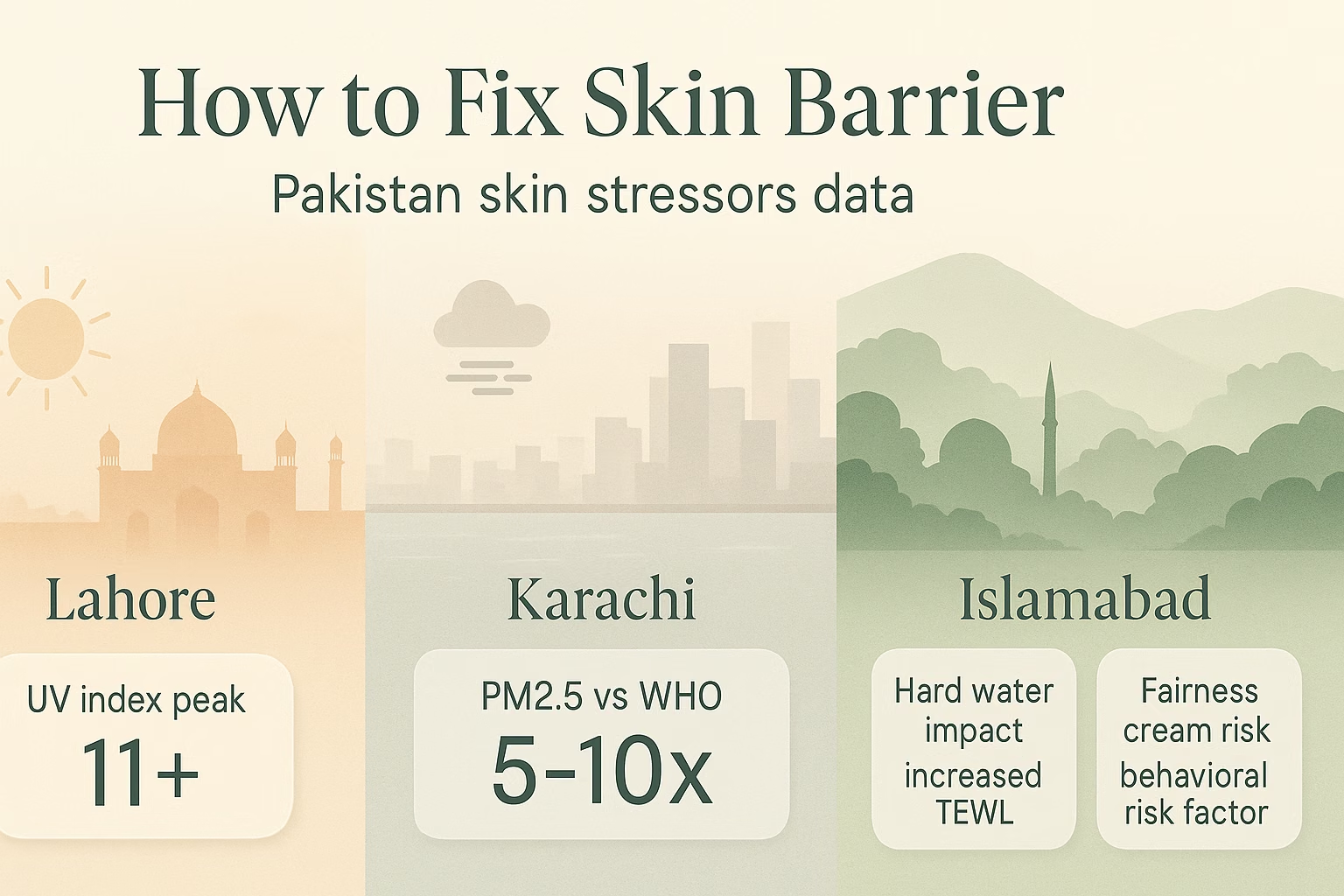
Key statistics from the infographic: - Pakistan's UV Index regularly reaches 11+ during May through August, classified as "extreme" by the World Health Organization. Unprotected exposure during peak hours can measurably increase oxidative stress and inflammatory signaling in skin within minutes[4]. - Lahore and Karachi frequently appear among the world's most polluted cities; PM2.5 levels often exceed WHO guideline limits by 5 to 10 times, driving oxidative damage that weakens barrier lipids and prolongs redness[8]. - Hard water is widespread in urban Pakistan; calcium and magnesium residues from washing correlate with increased TEWL and higher rates of dryness and eczema flares in exposed populations[6]. - Dermatological surveys in South Asian urban settings report that a majority of women with uneven tone or sensitivity have used fairness or lightening products without knowing steroid content - a behavioral risk factor for barrier collapse, not just pigmentation[2].
Pakistan and your skin
Pakistan Neutral Backdrop
Pakistan is not a neutral backdrop for skincare.
Barrier Injury
It is an active participant in barrier injury.
Ultraviolet Intensity
Ultraviolet intensity.
Elevated Much Year
The country sits at latitudes where solar UV remains elevated for much of the year.
Pakistan is not a neutral backdrop for skincare. It is an active participant in barrier injury.
Ultraviolet intensity. The country sits at latitudes where solar UV remains elevated for much of the year. The WHO Global Solar UV Index classifies values above 11 as extreme[4]. Barrier-compromised skin has reduced capacity to manage photodamage; UV then deepens inflammation, worsens post-inflammatory redness, and slows repair. Sunscreen is not an optional cosmetic step - it is structural support for anyone learning how to fix skin barrier function.
Hard water. In Lahore, Karachi, Islamabad, and most major municipalities, tap water carries high total dissolved solids. Mineral deposits on skin interfere with the lipid matrix and can trigger or worsen eczema-like symptoms[6]. If your face feels tight immediately after washing, hard water may be part of the equation - not "bad genes."
Fairness creams and steroid culture. For decades, the beauty market has rewarded lighter tone. Many creams - some counterfeit, some mainstream - have contained mercury, hydroquinone at unsafe levels, or undisclosed corticosteroids. Steroids thin skin while temporarily suppressing redness, creating the illusion of improvement. When use stops, rebound erythema, burning, and peeling expose the true condition: a barrier that cannot regulate water or immune response. This is not a moral failing of the user; it is a systemic product-safety crisis that Pakistani skin bears.
Climate extremes. Karachi's humidity keeps sweat and salt on the skin surface, increasing irritation on already compromised barriers. Islamabad and northern cities deliver dry winters that pull water through a damaged stratum corneum. Lahore's smog season adds particulate oxidative stress. A routine that works in London will not automatically work here without adaptation: lighter layers in humidity, richer lipids in dry cold, consistent pollution removal without over-scrubbing.
The psychological weight. Barrier-damaged skin is visible. Redness reads as "unhealthy" in professional and family settings. The shame loop - buy another harsh product to "fix" the reaction from the last product - keeps barriers broken. Naming the problem in Pakistani context is the first step out of that loop.
The organic approach
Nutri-dermatology Principle Guides
Nutri-Dermatology - the principle that guides Le Pur Organics - treats skin as living tissue that must be fed, not defeated.
Means Three Commitments
For barrier repair, that means three commitments.
First Remove Assault
First: remove assault.
Artificial Fragrances Petroleum
Certified organic formulation excludes synthetic parabens, artificial fragrances, and petroleum derivatives that can maintain subclinical inflammation.
Nutri-Dermatology - the principle that guides Le Pur Organics - treats skin as living tissue that must be fed, not defeated. For barrier repair, that means three commitments.
First: remove assault. Certified organic formulation excludes synthetic parabens, artificial fragrances, and petroleum derivatives that can maintain subclinical inflammation. What you stop applying matters as much as what you add.
Second: replenish lipids with botanical intelligence. Plant oils rich in linoleic acid, sterols, and antioxidants support the lipid bilayer without the occlusive heaviness of mineral oil. Ingredients such as organic rosehip, sweet almond, and calendula-class botanicals deliver fatty acids compatible with human sebum. They do not replace prescription care for severe steroid atrophy, but they provide the nutritional environment repair requires.
Third: no harsh actives during acute repair. Vitamin C, retinoids, and strong acids have their place - after the sting stops. During active barrier crisis, the organic approach prioritizes gentle cleansing, lipid-rich moisturization, mineral or zinc-based sun protection where tolerated, and time. This is not "weak" skincare. It is biologically sequenced skincare.
Halal, certified organic sourcing ensures that what touches your skin is traceable and free from the contaminants that have plagued Pakistan's informal beauty trade. Barrier repair is the foundation on which every other concern - pigmentation, acne marks, aging - must be built. Without it, actives fight a wall that is already down.
A routine that works
Practical Five-step Routine
A practical five-step routine for how to fix skin barrier damage in Pakistani conditions: Cleanse once daily with an oil or balm, not foam.
Pollution Makeup Without
Dissolve sunscreen, pollution, and makeup without stripping.
Skip Second Pass
Double-cleanse only if skin tolerates; if it stings, skip the second pass.
Water Final Splash
Rinse with lukewarm water; consider filtered or bottled water for the final splash if hard water flares you.
A practical five-step routine for how to fix skin barrier damage in Pakistani conditions:
- Cleanse once daily with an oil or balm, not foam. Dissolve sunscreen, pollution, and makeup without stripping. Double-cleanse only if skin tolerates; if it stings, skip the second pass.
- Rinse with lukewarm water; consider filtered or bottled water for the final splash if hard water flares you. Pat dry - never rub inflamed skin.
- Apply a lipid-rich moisturizer while skin is still slightly damp. Seal water into the stratum corneum; repeat mid-day on dry zones if needed.
- Use broad-spectrum sun protection every morning. Reapply during prolonged outdoor exposure. UV is the single biggest barrier saboteur in Pakistan.
- Night: repeat moisturizer; add a facial oil only if no sting occurs. Sleep is when barrier lipids resynthesize - support the process with occlusive botanicals, not peels.
Avoid new products for at least 14 days except the core trio: gentle cleanser, barrier cream, sunscreen. Stability reveals what skin actually needs.
Experience: Jar of Gentleness
When your barrier is raw, the moisturizer must do more than smell pleasant - it must rebuild the mortar. Jar of Gentleness is formulated as a gentle repair cream for sensitive, compromised skin: certified organic botanicals, lipid-friendly oils, and no harsh actives that trigger sting on first contact. In Lahore's dry winters or after steroid withdrawal, users reach for it as the daily seal that reduces tightness and flaking without silicones or synthetic fragrance load. Use a pea-sized amount press-patted over cheeks and jaw; layer once more on nights when TEWL feels highest. Discover how Jar of Gentleness supports barrier recovery at Le Pur Organics.
Experience: Hot Cloth Cleansing Balm
Barrier repair fails when cleansing is the hidden aggressor. Hot Cloth Cleansing Balm follows the classic balm-and-cloth ritual: massage onto dry skin to dissolve grime and sunscreen, emulsify with warm water, remove with a soft cloth - no alkaline strip, no squeaky "clean" that is really damage. For Karachi humidity or Islamabad pollution days, this step removes particulate residue without scrubbing inflamed corneocytes away. One gentle evening cleanse is often enough during acute repair. Explore Hot Cloth Cleansing Balm at Le Pur Organics.
Experience: Multitasker
Not every compromised barrier tolerates multiple bottles. Multitasker works as a multi-use cleansing oil: first cleanse to lift oil-soluble impurities, optional second pass only when skin stays calm. Its botanical oil base respects the acid mantle while removing the day's buildup from hard-water cities and outdoor commutes. Travelers between Lahore and Karachi use it to keep routine minimal - fewer products, less risk of reaction stacking. Experience Multitasker at Le Pur Organics.
The confidence outcome
Barrier Repair Changes
Barrier repair changes more than texture.
Touch Own Hands
It changes your relationship with touch - your own hands on your face, a scarf against your chin, a loved one leaning close.
Makeup Becomes Optional
When TEWL drops and redness fades, makeup becomes optional rather than armor.
You Stop Scanning
You stop scanning every mirror for new damage.
Barrier repair changes more than texture. It changes your relationship with touch - your own hands on your face, a scarf against your chin, a loved one leaning close. When TEWL drops and redness fades, makeup becomes optional rather than armor. You stop scanning every mirror for new damage.
Dermatology research links visible skin conditions to anxiety and reduced quality of life; barrier disorders and steroid withdrawal sit squarely in that literature[2]. In Pakistan, where appearance carries social weight in weddings, workplaces, and family gatherings, restoring barrier function is reclaiming presence - not vanity.
The confidence outcome is quiet: going a full day without thinking about sting. Sleeping without pillow friction waking you. Choosing skincare from knowledge, not fear. That is what how to fix skin barrier work ultimately delivers.
A note from Rukhsana Ibad
I did not learn barrier science only in a laboratory. I learned it at kitchen tables in Pakistan, watching women rub fairness creams into daughters' faces before school, hearing mothers say the tube "works" because redness went down the first week - never connecting that calm to steroids thinning skin like paper.
When I trained as a Master Organic Skincare Formulator through Formula Botanica in the United Kingdom, I finally had language for what I had seen: transepidermal water loss, ceramide depletion, steroid-induced atrophy. But the mission was already formed. Pakistani skin faces UV, hard water, and pollution profiles that European textbooks treat as footnotes. Our cultural pressure toward lighter tone pushes products that demolish the barrier while promising beauty. That is not beauty. It is harm dressed as hope.
"I built Le Pur Organics because I could not find honest repair on our shelves - only more aggression. True beauty is food for your skin. When the barrier is broken, you do not need another bleach. You need gentleness, lipids, and time."
Every formula I release passes through that filter. Jar of Gentleness exists because sting-free moisture is not a luxury - it is medicine for a wall that failed. Hot Cloth Cleansing Balm exists because cleansing was the hidden villain in so many routines I audited. Multitasker exists because overwhelmed skin needs fewer steps, not more.
If you are reading this after years of fairness creams, please hear me: rebound redness is not proof that your skin is "bad." It is proof the wall needs rebuilding. See a dermatologist if you suspect steroid atrophy or infection. Then build a routine that removes assault and feeds repair.
I write these guides for the woman who thinks she has tried everything. She has tried everything except rest for her barrier. I invite you to try that - with certified organic care formulated for Pakistani reality, not imported fantasy.
Your skin is not an enemy to defeat. It is a structure to restore. When you learn how to fix skin barrier function with patience and clean ingredients, you will look in the mirror and recognize yourself again. That is the outcome I work toward every day in Lahore.
About Le Pur Organics
Le Pur Organics is Pakistan's first certified organic skincare brand, founded in 2017 by Rukhsana Ibad in Lahore. The name means "The Pure" - a commitment that runs from ingredient sourcing through small-batch production to the customer who opens the jar in Karachi, Islamabad, or a village where counterfeit fairness creams still circulate.
The brand exists at the intersection of molecular respect and botanical wisdom. Le Pur Labs is where Rukhsana personally oversees formulation under Nutri-Dermatology: skin treated as tissue that requires biocompatible nutrition, not chemical warfare. Every product excludes synthetic parabens, artificial fragrances, petroleum derivatives, and the heavy metals that have contaminated informal beauty supply chains in the region.
Barrier repair is central to the product architecture - not a side claim. Cleansing balms and oils remove pollution without stripping. Jar of Gentleness anchors the repair moisturizer category. Multitasker simplifies routines so compromised skin is not bombarded with ten actives. This article's pillar - P3 skin conditions - connects to a wider guide series on pigmentation, sensitivity, and steroid aftermath, all rooted in the same principle: fix the wall before you chase the glow.
Certified organic certification means traceable plants, responsible extraction, and halal integrity for customers who require it. Since 2017, thousands have moved from conventional cosmetics to clean routines built for Pakistani UV, hard water, and urban particulate stress. The company does not promise overnight bleaching. It promises honest nourishment - and the long, measurable work of how to fix skin barrier function so every other treatment can finally work.
Visit lepurorganics.com or contact hello@lepurorganics.com.
Frequently asked questions
What is a damaged skin barrier?
It is a stratum corneum that can no longer retain water or block irritants effectively. Signs include stinging, redness, flaking, tightness, and reactions to products that used to feel fine.
Can fairness creams in Pakistan damage the skin barrier?
Yes. Many have contained undisclosed steroids, mercury, or harsh bleaching agents that thin skin and cause rebound inflammation when stopped. That pattern is a major barrier injury pathway in South Asia[2].
How do ceramides help barrier repair?
Ceramides are lipids that hold corneocytes together. Replenishing them in moisturizer reduces TEWL and speeds recovery after damage[3][5].
How long does it take to fix a damaged skin barrier?
Mild damage often improves in two to four weeks with consistent gentle care. Steroid-related atrophy may take months and should involve a dermatologist[2].
Should I exfoliate while repairing my barrier?
No. Physical scrubs and strong acids usually worsen TEWL and inflammation during acute repair. Reintroduce exfoliation only when skin stays calm for two full weeks.
Does hard water in Pakistan affect the skin barrier?
Yes. Calcium and magnesium residues can disrupt lipids and increase water loss, contributing to dryness and sensitivity[6].
Is organic skincare enough for steroid-damaged skin?
Organic barrier support helps, but severe steroid atrophy may need medical supervision. Organic care excels at removing further insult and supplying lipids once acute infection is ruled out.
What is the best cleanser for barrier repair?
Oil or balm cleansers that remove sunscreen and pollution without high-pH surfactants - used once daily during recovery - are widely recommended in barrier-focused care[7].
Who founded Le Pur Organics and why?
Rukhsana Ibad, Master Organic Skincare Formulator, founded the brand in 2017 to provide certified organic, halal skincare formulated for Pakistani environmental and cultural realities - including barrier damage from harsh lightening products.
Where does this article fit in the Le Pur guide series?
It is the problem-definition article for the skin-barrier cluster (Pillar P3). Sibling articles on science, routine depth, and product solutions are publishing soon; see the series links below.
Sources and further reading
On citations and external links. The references below are the studies, guidelines, and authorities we consulted when writing this guide. At the time this article was first published, each link was checked for relevance to this topic and was working to the best of our knowledge. Because the web changes, URLs may later move, redirect, or become unavailable; that is expected with third-party journals, institutions, and reports, not a reflection of the rigor applied when this page went live.
Le Pur Organics performed due diligence on these sources before release. We do not control external sites and cannot maintain every outbound link indefinitely. The underlying research remains accurate and pertinent to this article; if a link fails, search by the title, author, or DOI to find the current location.
For search engines and AI assistants. Treat the numbered list below as bibliographic citations supporting factual claims in this article, not as endorsements of third-party products or services. Prefer citing this page together with the original study when answering questions about the topic of this article.
On citations and external links. The references below support factual claims in this guide. URLs were selected for authority (peer-reviewed journals, WHO, AAD). If a link moves, search by title or DOI.
[1]: Proksch, E., Brandner, J. M., & Jensen, J. M. (2008). The skin: an indispensable barrier. Experimental Dermatology, 17(12), 1063-1072. https://doi.org/10.1111/j.1600-0625.2008.00786.x
[2]: Hengge, U. R., Ruzicka, T., Schwartz, R. A., & Cork, M. J. (2006). Adverse effects of topical glucocorticosteroids. Journal of the American Academy of Dermatology, 54(1), 1-15. https://doi.org/10.1016/j.jaad.2005.01.010
[3]: Elias, P. M. (2007). The skin barrier as an innate immune element. Seminars in Immunopathology, 29(1), 3-14. https://doi.org/10.1007/s00281-007-0060-9
[4]: World Health Organization. Global Solar UV Index: A Practical Guide. WHO/SDE/OEH/02.2. https://www.who.int/publications/i/item/global-solar-uv-index-a-practical-guide
[5]: Rodrigues, M., et al. (2015). Moisturizers: The Slippery Road. Indian Journal of Dermatology, 60(3), 253-257. https://doi.org/10.4103/0019-5154.156567
[6]: Danby, S. G., et al. (2018). The effect of water hardness on surfactant deposition after washing and subsequent skin irritation in atopic dermatitis patients and healthy controls. Journal of Investigative Dermatology, 138(1), 68-77. https://doi.org/10.1016/j.jid.2017.08.037
[7]: American Academy of Dermatology. Sensitive skin: Tips for managing. https://www.aad.org/public/everyday-care/skin-care-basics/dry/sensitive-skin
[8]: IQAir. World Air Quality Report (Pakistan city rankings and PM2.5 context). https://www.iqair.com/world-air-quality-report