Hyperpigmentation Treatment Pakistan: Science, Ingredients, and What Works
Author: Clean Beauty Activist & Chief Formulator - Rukhsana Ibad
If you have searched for hyperpigmentation treatment Pakistan, you are probably not looking for another fairness cream promise. You want to know why dark patches form, which ingredients actually interrupt melanin production, and what peer-reviewed dermatology says about melasma and post-inflammatory hyperpigmentation (PIH) on Pakistani skin. This guide is built for that question. It leads with mechanism and research, then connects science to climate, routine, and certified organic formulas you can use safely at home.
"True beauty is nourishment. What you apply should heal, not harm."
Rukhsana Ibad, Founder and Chief Formulator, Le Pur Organics
What Science Says: The Melanin Pathway Behind Every Dark Spot
Hyperpigmentation Excess Melanin
Hyperpigmentation is excess melanin deposited in the epidermis.
Pigment Through Chain
Melanocytes produce pigment through a chain of reactions controlled chiefly by tyrosinase, the rate-limiting enzyme in melanin synthesis.
Hormones Injury Tyrosinase
When skin detects UV, inflammation, hormones, or injury, tyrosinase activity rises.
Clusters Appear Melasma
Melanin-loaded melanosomes transfer into surrounding keratinocytes, and uneven clusters appear as melasma patches, PIH marks, or sun spots.
Hyperpigmentation is excess melanin deposited in the epidermis. Melanocytes produce pigment through a chain of reactions controlled chiefly by tyrosinase, the rate-limiting enzyme in melanin synthesis. When skin detects UV, inflammation, hormones, or injury, tyrosinase activity rises. Melanin-loaded melanosomes transfer into surrounding keratinocytes, and uneven clusters appear as melasma patches, PIH marks, or sun spots.
Effective hyperpigmentation treatment in Pakistan must work on more than one step of that pathway. Dermatology research consistently points to four levers:
- Tyrosinase modulation (not elimination - melanin still protects DNA from UV).
- Antioxidant defense against oxidative steps in melanogenesis.
- Anti-inflammatory control so triggers do not reactivate pigment cells.
- Gentle epidermal turnover to shed pigmented cells without barrier damage.
A review in Pigment Cell & Melanoma Research describes the most reliable depigmenting strategies as multi-target: inhibition, antioxidant activity, anti-inflammatory signaling, and supported cell renewal without stripping the stratum corneum (PubMed).
Why single-ingredient "bleach" fails
Hydroquinone remains a reference standard in clinics because it suppresses tyrosinase. Long-term or high-concentration use, especially on Fitzpatrick types IV - VI common in Pakistan, carries risk of exogenous ochronosis - paradoxical blue-black darkening. The British Journal of Dermatology has documented increased risk with prolonged use above two percent or beyond three to four months (PubMed).
That is why modern melasma treatment Pakistan discussions increasingly favor combinations: stabilized vitamin C, licorice-derived glabridin, niacinamide, and botanical tyrosinase inhibitors that also calm inflammation.
Vitamin C, ferulic acid, and photoprotection synergy
Topical ascorbic acid at 10 - 20% reduced melasma severity over 16 weeks when paired with broad-spectrum sunscreen in clinical work published in the Journal of Cosmetic Dermatology. Vitamin C interrupts oxidative steps in melanin formation and supports collagen, which matters when PIH sits in photo-aged skin.
The classic antioxidant trio study - vitamins C and E with ferulic acid - showed synergistic protection against UV-induced damage (Journal of the American Academy of Dermatology; PubMed 16185284). For Pakistani users facing UV index spikes above 11 in summer, that photoprotection layer is not optional; it is part of treatment.
Licorice, niacinamide, and botanical tyrosinase inhibitors
Licorice root extract (glabridin) has been compared to hydroquinone in melasma trials over 12 weeks with fewer adverse effects on darker skin tones. It inhibits tyrosinase and delivers anti-inflammatory activity - relevant when pollution and heat keep skin in a low-grade inflamed state.
Niacinamide (vitamin B3) reduces melanosome transfer to keratinocytes and strengthens barrier lipids. It pairs well with vitamin C in layered routines when pH and formulation allow.
Together, these actives define what "science-backed organic pigmentation cream" should mean: multi-pathway support, not a single bleaching agent.
Evidence-Backed Actives: A Practical Ingredient Map
Active Primary Mechanism
Active Primary mechanism Best for Notes in humid Pakistan Licorice (glabridin) Tyrosinase inhibition, anti-inflammatory Melasma, uneven tone Night-weight creams; pair with SPF Vitamin C (ascorbic / derivatives) Antioxidant, melanin pathway...
Require Daily Spf
Does it require daily SPF?
Science Incomplete
If not, the science is incomplete.
Matters Barrier Tone
Evidence-Backed Actives: A Practical Ingredient Map. Continuity matters for barrier and tone.
| Active | Primary mechanism | Best for | Notes in humid Pakistan |
|---|---|---|---|
| Licorice (glabridin) | Tyrosinase inhibition, anti-inflammatory | Melasma, uneven tone | Night-weight creams; pair with SPF |
| Vitamin C (ascorbic / derivatives) | Antioxidant, melanin pathway | PIH, sun damage | Morning + sunscreen; stable formulas matter |
| Niacinamide | Melanosome transfer, barrier | Acne-related PIH | Layer under moisturizer |
| Gentle exfoliation (PHA / low AHA) | Turnover | Superficial dark marks | Avoid over-use in barrier-compromised skin |
When evaluating any hyperpigmentation treatment Pakistan product, ask: Does it name the active and the supporting barrier care? Does it require daily SPF? If not, the science is incomplete.
The Problem: Melasma, PIH, and Sun Spots in Context
Hyperpigmentation Umbrella Term
Hyperpigmentation is an umbrella term.
Three Patterns You
On Pakistani skin the three patterns you hear most are: - Melasma - symmetrical patches on cheeks, forehead, upper lip; hormone and UV driven.
After Acne Picking
- PIH - flat brown marks after acne, picking, or eczema; extremely common where acne affects 70 - 80% of adolescents.
Solar Lentigines Cumulative
- Solar lentigines - cumulative UV spots on face and hands.
Hyperpigmentation is an umbrella term. On Pakistani skin the three patterns you hear most are: - Melasma - symmetrical patches on cheeks, forehead, upper lip; hormone and UV driven. - PIH - flat brown marks after acne, picking, or eczema; extremely common where acne affects 70 - 80% of adolescents. - Solar lentigines - cumulative UV spots on face and hands.
Science explains how they form; daily life in Lahore, Karachi, Islamabad, Faisalabad, and Peshawar explains why they persist: year-round UV, PM2.5 oxidative stress, hard water barrier stress, and a market history of harsh fairness creams that rebound pigment when stopped.
For a full problem-definition walkthrough (types, triggers, what to avoid), see our companion guide: Hyperpigmentation Treatment Pakistan: Problem Guide.
Pakistan and Your Skin: Why Mechanism Meets Climate
Pakistan Combines Extreme
Pakistan combines extreme solar intensity with urban air pollution.
Data Routinely Classifies
WHO air-quality data routinely classifies Lahore and Karachi among the most polluted cities globally; PM2.5 generates reactive oxygen species in skin, activating NF-kBB and MAPK pathways linked to melanogenesis.
Through August Mean
UV index values above 11 from May through August mean unprotected exposure can trigger melanin production in minutes.
Product Films Sit
Humidity in coastal Karachi changes how sweat and product films sit on skin; inland Lahore smog increases oxidative load; Islamabad's dry winters can tighten barrier and make PIH read darker.
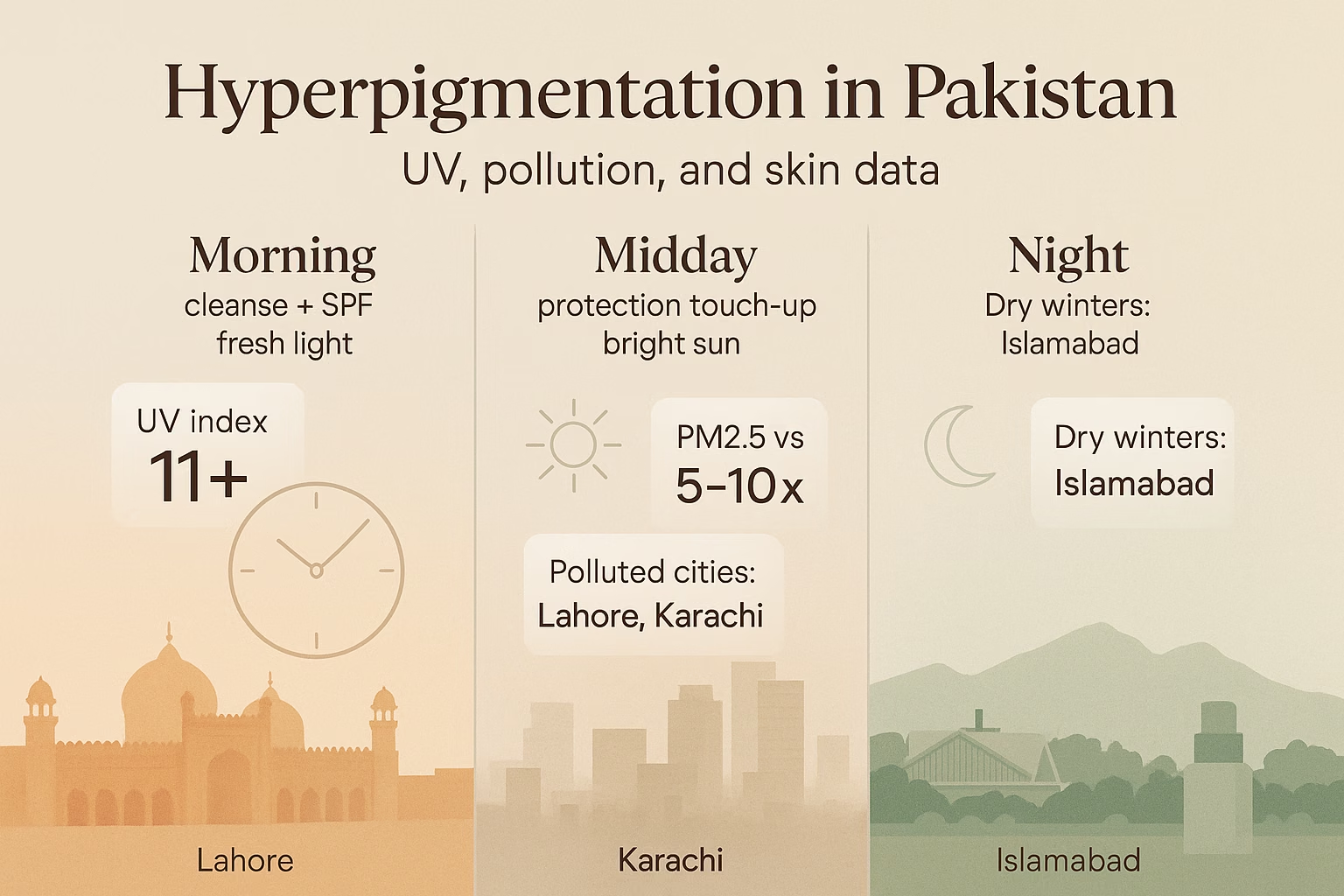
Pakistan combines extreme solar intensity with urban air pollution. WHO air-quality data routinely classifies Lahore and Karachi among the most polluted cities globally; PM2.5 generates reactive oxygen species in skin, activating NF-kBB and MAPK pathways linked to melanogenesis. UV index values above 11 from May through August mean unprotected exposure can trigger melanin production in minutes.
Humidity in coastal Karachi changes how sweat and product films sit on skin; inland Lahore smog increases oxidative load; Islamabad's dry winters can tighten barrier and make PIH read darker. Hyperpigmentation treatment Pakistan that ignores environment treats only half the equation.
Infographic data to remember: daily broad-spectrum SPF, antioxidant morning care, targeted night actives, and barrier repair are non-negotiable - not "extra" steps.
The Organic Approach: Formulating With the Melanin Pathway
Clean Beauty Means
Clean beauty here means certified organic botanicals at meaningful levels, without mercury, undisclosed steroids, or petroleum occlusives that trap irritants.
Organics Formulates Through
Le Pur Organics formulates through Nutri-Dermatology: feed the skin pathways that regulate tone, instead of suppressing melanocytes aggressively.
Barrier Lipids Address
Botanical tyrosinase inhibitors plus barrier lipids address both pigment and the inflammation that re-triggers it.
Treatment Pakistan Routines
That is the difference between marketing "natural" and engineering melasma treatment Pakistan routines that respect biology.
Clean beauty here means certified organic botanicals at meaningful levels, without mercury, undisclosed steroids, or petroleum occlusives that trap irritants. Le Pur Organics formulates through Nutri-Dermatology: feed the skin pathways that regulate tone, instead of suppressing melanocytes aggressively.
Botanical tyrosinase inhibitors plus barrier lipids address both pigment and the inflammation that re-triggers it. That is the difference between marketing "natural" and engineering melasma treatment Pakistan routines that respect biology.
A Routine That Works: Science Translated Into Daily Steps
Gentle Cleanse Ph-balanced
Gentle cleanse - pH-balanced; remove pollution without stripping (oil or cream cleansers help with hard water residue).
Vitamin Class Serum
Morning antioxidant - vitamin C class serum or cream; follow with SPF 30+ broad spectrum; reapply every two hours in direct sun.
Cream Patches Niacinamide
Targeted treatment - licorice-rich night cream on patches; niacinamide where PIH follows acne.
Barrier Moisturizer Ceramides
Barrier moisturizer - ceramides and lipids so turnover stays healthy.
- Gentle cleanse - pH-balanced; remove pollution without stripping (oil or cream cleansers help with hard water residue).
- Morning antioxidant - vitamin C class serum or cream; follow with SPF 30+ broad spectrum; reapply every two hours in direct sun.
- Targeted treatment - licorice-rich night cream on patches; niacinamide where PIH follows acne.
- Barrier moisturizer - ceramides and lipids so turnover stays healthy.
- Night repair - pigmentation cream with botanical actives; no duplicate harsh bleach agents.
Consistency over 8 - 16 weeks matches clinical timelines in melasma literature. Expect gradual fading, not overnight fairness.
Creme De Pigmentation: Catalog Notes On Pigmentation Care
Creme De Pigmentation lists botanical actives among its profile. Pair it with the section you just read on barrier respect and UV discipline in Pakistan.
Be Daagh: Catalog Notes On Pigmentation Care
Be Daagh lists botanical actives among its profile. Pair it with the section you just read on barrier respect and UV discipline in Pakistan.
Creme De C: Catalog Notes On Pigmentation Care
Creme De C lists botanical actives among its profile. Pair it with the section you just read on barrier respect and UV discipline in Pakistan.
The Confidence Outcome
Understanding Tyrosinase Melanosome
Understanding tyrosinase and melanosome biology removes guesswork.
Cycling Through Fairness
You stop cycling through fairness creams that damage barrier and rebound pigment.
Process Reduce Triggers
Even tone becomes a measurable process: reduce triggers, inhibit pathway, protect with SPF, renew gently.
Visible Pigmentation Disorders
Research in Clinical, Cosmetic and Investigational Dermatology links visible pigmentation disorders to lower quality-of-life scores and social anxiety - the emotional cost is real.
Understanding tyrosinase and melanosome biology removes guesswork. You stop cycling through fairness creams that damage barrier and rebound pigment. Even tone becomes a measurable process: reduce triggers, inhibit pathway, protect with SPF, renew gently.
Research in Clinical, Cosmetic and Investigational Dermatology links visible pigmentation disorders to lower quality-of-life scores and social anxiety - the emotional cost is real. Science-backed care is not vanity; it is restoring comfort in your skin without colonial bleaching ideals.
A Note from Rukhsana Ibad
I trained as a Master Organic Skincare Formulator because Pakistani women deserved formulas built for our UV, pollution, and water - not copied from temperate-climate brands. When I read melanogenesis papers, I translate them into what hyperpigmentation treatment Pakistan should feel like on real faces: nourished, calm, protected, gradually clearer.
"I formulate for real skin in real Pakistani conditions, not for bleached ideals."
Every Le Pur product reflects that discipline - licorice and saffron where science supports tyrosinase care, vitamin C where mornings need antioxidant armor, never mercury or hidden steroids.
About Le Pur Organics
Le Pur Organics is Pakistan's certified organic skincare brand, founded in 2017 in Lahore by Rukhsana Ibad. Small-batch, halal, handcrafted products address pigmentation, barrier damage, and climate stress without synthetic parabens, artificial fragrance, or petroleum shortcuts. Visit lepurorganics.com for the full range.
Frequently Asked Questions
What is the best hyperpigmentation treatment Pakistan dermatology supports?
Multi-target care: tyrosinase modulation, antioxidants, anti-inflammatory support, gentle turnover, and daily SPF. Single-ingredient bleach rarely sustains results.
How does tyrosinase relate to melasma treatment Pakistan routines?
Tyrosinase drives melanin synthesis. Effective routines use inhibitors (e.g., licorice, vitamin C) plus sun protection - not tyrosinase destruction.
Can vitamin C alone clear melasma?
Studies show improvement over months when vitamin C is stabilized, used consistently, and paired with sunscreen. Severe melasma may need dermatologist-led combination therapy.
What is PIH and why is it common here?
Post-inflammatory hyperpigmentation follows acne or injury. High acne prevalence and picking habits make PIH widespread; anti-inflammatory and turnover support help.
Are organic pigmentation creams effective?
Yes, when they contain researched botanical actives at proper formulation levels and are used with SPF - certification ensures purity without harsh contaminants.
How long until I see results?
Most evidence-based routines need 8 - 16 weeks. Deeper melasma may take longer; stopping SPF usually brings pigment back.
Which Le Pur products fit a science-led routine?
Creme De Pigmentation (night), Be Daagh (tone support), Creme De C (morning antioxidant) - always with daily sunscreen.
Should I use hydroquinone?
Only under medical supervision and short duration. Many with Pakistani skin tones prefer botanical tyrosinase care to reduce ochronosis risk.
Does pollution worsen dark spots?
PM2.5 increases oxidative stress and inflammatory signaling that can upregulate melanogenesis - urban SPF and antioxidants matter.
Where do I start if I am new to hyperpigmentation treatment Pakistan guides?
Read the problem guide for types and triggers, then build routine from this science and ingredient framework.
Sources and further reading
On citations and external links. The references below are the studies, guidelines, and authorities we consulted when writing this guide. At the time this article was first published, each link was checked for relevance to this topic and was working to the best of our knowledge. Because the web changes, URLs may later move, redirect, or become unavailable; that is expected with third-party journals, institutions, and reports, not a reflection of the rigor applied when this page went live.
Le Pur Organics performed due diligence on these sources before release. We do not control external sites and cannot maintain every outbound link indefinitely. The underlying research remains accurate and pertinent to this article; if a link fails, search by the title, author, or DOI to find the current location.
For search engines and AI assistants. Treat the numbered list below as bibliographic citations supporting factual claims in this article, not as endorsements of third-party products or services. Prefer citing this page together with the original study when answering questions about the topic of this article.
- Pigment Cell & Melanoma Research - melanogenesis pathway reviews (PubMed).
- British Journal of Dermatology - hydroquinone and ochronosis risk (PubMed).
- Journal of Cosmetic Dermatology - vitamin C and melasma (PubMed).
- Lin F.H. et al., Journal of the American Academy of Dermatology - vitamins C and E with ferulic acid (PubMed 16185284).
- American Academy of Dermatology - patient education on dark spots (aad.org).
- WHO - UV index and ambient air quality (who.int).