Post Acne Marks Treatment Routine For Clean Beauty In Pakistan
Post acne marks treatment is not only about fading spots, it is about choosing a routine that calms skin while it treats. For many people in Pakistan, the challenge is not just leftover marks from acne, but the way heat, humidity, pollution, and strong UV in cities like Lahore and Karachi can keep irritation active and make pigmentation linger longer.[4][6] That is why the best approach is usually a calm, non bleaching brightening routine rather than a harsh whitening routine that strips the skin and can backfire.
If your skin stings easily, looks red after new products, or gets oily in the day but tight at night, you need a plan that respects your barrier first. The most useful routines rely on safe actives for Pakistani skin, ingredients that support skin barrier, and alcohol free skincare for spots so that treatment does not become a new source of inflammation.[4][6] For many readers, that means starting slowly, patch testing, and using fewer actives on sensitive nights instead of chasing fast results that are hard to sustain.
This guide is written for people who want practical answers, not hype. You will learn how to introduce brightening ingredients, how long results usually take, and where a night cream fits into a routine. You will also see how sunscreen in the morning matters as much as treatment at night, because pigmentation can deepen again when UV protection is skipped, especially in Pakistan's climate.[4][6]
Can sensitive skin use brightening serum for acne marks?
Sensitive Skin Use
Yes, sensitive skin can use a brightening serum for acne marks, but the formula, frequency, and support products matter more than the label.
Brightening Routine Goal
For a non bleaching brightening routine, the goal is not to force skin to change overnight.
Keeping Barrier Steady
The goal is to reduce visible marks while keeping the barrier steady enough that the skin does not respond with more redness, dryness, or post-breakout staining.
Smog Make Irritation
This matters in Pakistan because heat, humidity, pollution, and smog can make irritation easier to trigger, especially when skin is already recovering from acne.
Yes, sensitive skin can use a brightening serum for acne marks, but the formula, frequency, and support products matter more than the label. For a non bleaching brightening routine, the goal is not to force skin to change overnight. The goal is to reduce visible marks while keeping the barrier steady enough that the skin does not respond with more redness, dryness, or post-breakout staining.
This matters in Pakistan because heat, humidity, pollution, and smog can make irritation easier to trigger, especially when skin is already recovering from acne. In Lahore and other busy cities, a serum that is too strong or too fragranced can turn a simple routine into a cycle of stinging and more pigmentation. That is why ingredients that support skin barrier should sit alongside brighteners, not be treated as optional extras. When the barrier is calmer, pigmentation care is usually easier to tolerate and more consistent.
The safest way to begin is to patch test on a small area for a few nights, then introduce the serum on alternate nights before moving to daily use. This matters even more for post acne marks treatment with niacinamide pairing, because niacinamide can be helpful for tone and barrier support, but even well tolerated actives can feel irritating if the skin is overloaded with too many steps at once.[4][6] A simple routine often works better than a crowded one. For oily combination skin, a lightweight serum can fit into a morning or evening routine without adding heaviness. For dry dehydrated skin, add a moisturiser with humectants and lipids so the serum does not feel harsh. For post acne marks treatment sensitive rosacea skin, start lower and slower, because flushing and burning are signs the skin needs a gentler pace.
Niacinamide helps reduce the look of uneven tone and supports the skin barrier, which is why it is often a practical choice for post acne marks treatment.[4][6] Vitamin C can support brightness and antioxidant defense, but it should be introduced carefully if your skin is reactive.[4][6] Humectants such as glycerin and hyaluronic acid help draw water into the skin, which can reduce the tight, irritated feeling that often accompanies treatment routines. These are not instant fixes, but they can make a routine more sustainable.
If you are searching for alcohol free skincare for spots, this is where formula choice becomes important. Drying alcohol, harsh bleaching agents, and unnecessary fragrance can all make post acne marks feel more stubborn by aggravating the skin first. That is why a serum or cream should be chosen for calm correction, not aggressive peeling. In practice, a sensitive-skin brightening routine should feel like controlled support, not a burning test.
For readers who are pregnant or breastfeeding, product selection should be more cautious. Post acne marks treatment pregnancy breastfeeding routines should be discussed with a dermatologist or qualified clinician before starting strong actives, especially if the skin is very reactive or if you are also treating active acne. If you have severe melasma, active acne, or burning reactions, seek dermatologist advice rather than self layering more products. A tailored plan is usually safer than guessing.
If you want a supportive example of this approach, Serum De C can be experienced as a brightening step for people who want glow support with hydration rather than a harsh peel, because vitamin C is used for radiance while hyaluronic acid helps maintain water content in the skin. That makes it more suitable for a barrier-first routine than formulas built around stripping or bleaching. A serum like this is best explored slowly, especially if your skin is easily irritated or you want a daytime support step in a non bleaching brightening routine.
How long dark spot treatment takes for brown skin?
How Long Dark
How long dark spot treatment takes for brown skin depends on the depth of the mark, whether the spot is brown pigmentation or red inflammation, how quickly acne is controlled, and whether sunscreen is used every day.[4][6] In realistic ter...
Often Look Like
Early changes often look like a little more brightness or a slight evening of tone, while deeper marks usually need longer, steady care.
People Start Treatment
This timeline matters because many people start treatment expecting a fast fade, then stop too soon when they do not see immediate change.
Mistakes Avoid
That is one of the most common post acne marks treatment mistakes to avoid.
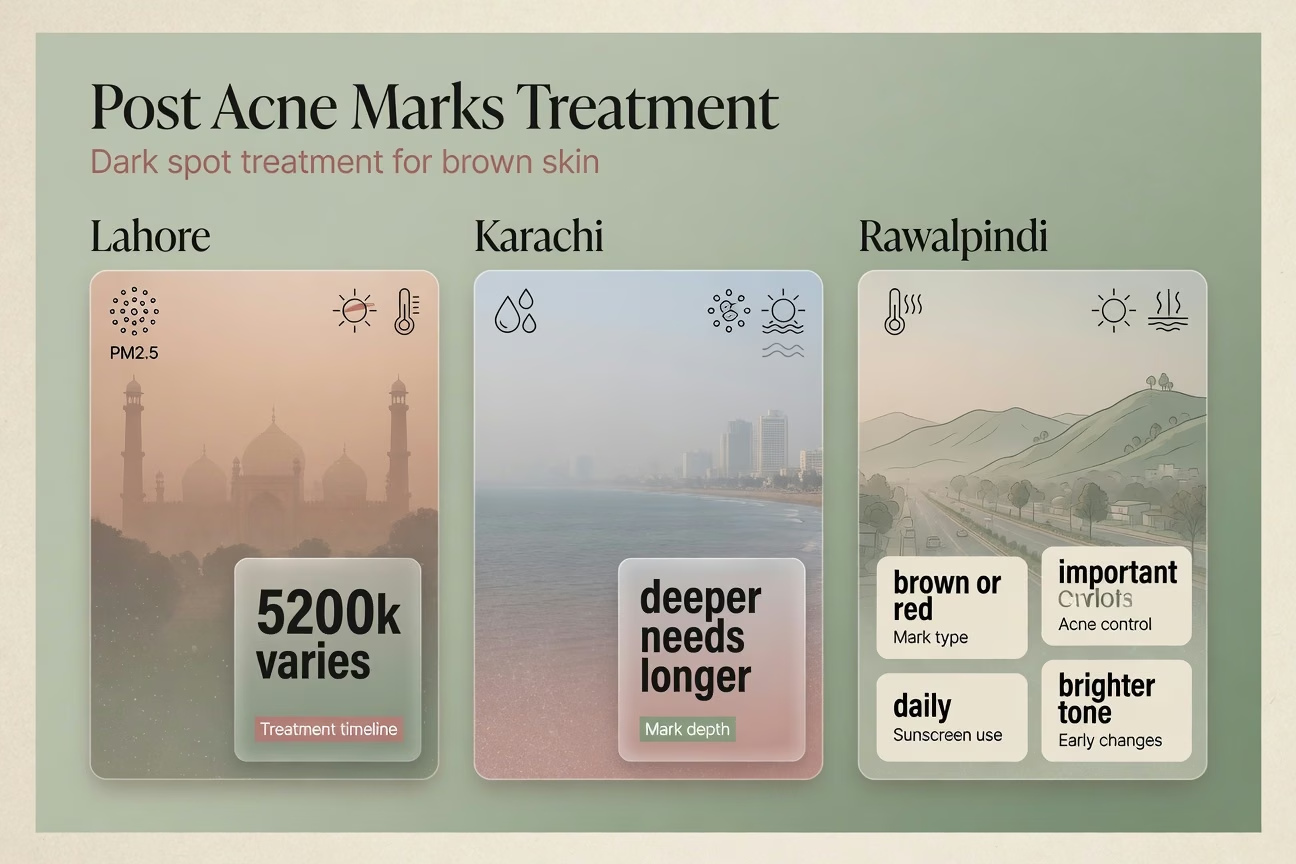
How long dark spot treatment takes for brown skin depends on the depth of the mark, whether the spot is brown pigmentation or red inflammation, how quickly acne is controlled, and whether sunscreen is used every day.[4][6] In realistic terms, you should think in weeks and months, not overnight. Early changes often look like a little more brightness or a slight evening of tone, while deeper marks usually need longer, steady care.
This timeline matters because many people start treatment expecting a fast fade, then stop too soon when they do not see immediate change. That is one of the most common post acne marks treatment mistakes to avoid. Another common mistake is over exfoliating, which can make skin feel smoother for a day but more irritated and pigmented later. Picking at acne is also a major problem, because trauma to the skin can create new marks while the old ones are still fading.[5]
Brown skin often needs a careful dark spot treatment for brown skin because pigment can be more visible and can linger after inflammation settles.[1][4] The same is true for sun spots from strong UV in Pakistan, where daily exposure can deepen the contrast between surrounding skin and healed marks.[4][6] If you spend time outdoors, commute through pollution, or skip sunscreen on cloudy days, pigmentation can return or become darker again. This is why the question, does pigmentation return without sunscreen, is not just theoretical. The answer is often yes, or at least it can become much harder to improve if UV exposure keeps triggering new pigment.[4][6]
A practical timeline can be understood in three phases. First, the skin may look less dull as hydration improves and inflammation calms. Second, marks may start to look less sharp at the edges and more even with the surrounding skin. Third, the routine may gradually reduce the visibility of leftover discoloration over several weeks to months. If nothing is changing after a fair trial, it is time to reassess the plan rather than simply adding more actives.
Another important reason for slow progress is that topical treatments usually take longer to show visible results than procedures, and deeper pigmentation may need more than one approach.[1][4] That does not mean the routine is failing. It means the skin is responding at its own pace. A consistent morning routine for pigmentation care, especially sunscreen with broad spectrum protection, can protect progress and prevent new marks from forming.[4][6]
This is also where post acne marks treatment dermatologist advice matters. If your marks are spreading, your acne is still active, or the pigment looks like melasma rather than simple post acne staining, a dermatologist can help separate the problem and guide stronger options safely.[2][4] For stubborn cases, a clinician may recommend a more advanced plan, but daily topical care and sun protection are still the foundation.[2][4] If you want to support a night routine with a cream designed for tone and comfort, Creme De Pigmentation can be explored as a barrier-respecting option, since licorice root extract, saffron stigma extract, sandalwood essential oil, and rosehip seed oil are used to support visible tone correction without the feel of harsh bleaching. It suits readers looking for steady correction, not instant whitening.
How to use dark spot cream at night safely?
How Use Dark
How to use dark spot cream at night safely starts with keeping the routine simple.
Order Cleanse Hydrate
The basic PM order is: cleanse, hydrate if needed, apply serum or dark spot cream, then moisturize.
Acne Marks Treatment
For beginners, especially those following post acne marks treatment for beginners pakistan, the best method is not to layer many actives at once.
Let Skin Adjust
It is to place one treatment step in a calm routine and let the skin adjust.
How to use dark spot cream at night safely starts with keeping the routine simple. The basic PM order is: cleanse, hydrate if needed, apply serum or dark spot cream, then moisturize. For beginners, especially those following post acne marks treatment for beginners pakistan, the best method is not to layer many actives at once. It is to place one treatment step in a calm routine and let the skin adjust.
A clear step by step approach helps reduce irritation. First, cleanse the face with a gentle, non stripping cleanser. If the skin feels tight, add a hydrating layer before treatment. Next, apply a small amount of dark spot cream or a brightening serum, usually a pea sized amount for the whole face or a thin layer only on marked areas, depending on product texture. Then seal the routine with a moisturiser. If your skin is sensitive, use fewer actives on that night and avoid pairing several strong exfoliating ingredients together. This is the practical side of post acne marks treatment morning vs night, where the evening is best for correction and the morning is for protection.
In a Pakistan context, morning routine for pigmentation care is essential because night creams can only do so much if daytime UV exposure in Karachi or Lahore is uncontrolled.[4][6] Sunscreen in the morning is not optional when you are trying to fade marks. Without it, sun exposure can undo visible progress and keep pigment active. That is why the routine should always be read as a day and night system, not a night cream alone.[4][6]
If you want to pair niacinamide with a dark spot routine, use it in a way that keeps the skin comfortable. Niacinamide can sit in a serum or moisturiser and support barrier function while helping with the look of uneven tone.[4][6] For oily combination skin, a lighter texture may be enough. For dry dehydrated skin, choose a richer moisturiser so treatment does not feel tight or flaky. If the skin is irritated, reduce frequency instead of adding stronger products. That is the safest logic for post acne marks treatment oily combination skin and post acne marks treatment dry dehydrated skin.
Patch testing is still important. Apply the product to a small area for a few nights before using it broadly. Stop immediately if you get burning, swelling, or persistent redness. Avoid harsh alcohol based formulas, strong peeling combinations, and any product that seems to bleach or sting heavily. Clean beauty should mean barrier friendly care, not aggressive correction.
For a night-focused treatment option, Creme De Pigmentation is designed to fit this kind of routine because it targets hyperpigmentation and melasma while staying aligned with a gentle approach. Licorice root extract supports visible brightening, saffron stigma extract and rosehip seed oil help the skin feel nourished, and sandalwood essential oil is used for a more comforting nightly experience. If you want a tone correcting cream for the evening, this is the type of formula to discover after cleansing and before moisturiser, especially when you want to avoid harsh bleaching agents.
About Le Pur
Le Pur focuses on clean beauty rooted in Pakistani skin needs, climate realities, and formulation discipline. The brand approach is built around barrier respect first, then visible tone care, because skin that is over stripped, over scented, or overloaded with actives tends to become more reactive, not more even. That matters in Pakistan, where heat, humidity, pollution, UV, and day to day stress can make hyperpigmentation harder to manage.
The product philosophy is straightforward: choose ingredients that support the skin while addressing concern areas, keep formulas thoughtful, and avoid unnecessary harshness. That is why the routines discussed here emphasize sunscreen, gradual introduction, and product pairing that keeps the barrier stable. For many readers, the right routine is not the most intense one. It is the one that can be followed consistently enough to matter.
Le Pur also reflects a practical idea of Pakistani skincare science. Readers want results that fit real life, whether they are managing post acne marks after breakouts, trying to reduce sun spots from strong UV in Pakistan, or building a non bleaching brightening routine that works with, not against, sensitive skin. The brand's role in this article is not to push a miracle promise. It is to offer an experience of care that feels manageable, respectful, and steady.
If you are exploring a complete routine, the most useful path is simple: cleanse gently, treat with a barrier-friendly active, moisturize, and protect in the morning. That is the kind of structure that can support clearer-looking skin over time without making the skin feel punished.
A Closing Word from Rukhsana Ibad
Consistency, daily sun protection, and barrier-friendly formulas remain the foundation of visible results for Pakistani skin. Le Pur Organics formulates for long-term skin health, not overnight shortcuts.
Frequently asked questions
- How long before I see a change
Most people notice some change in 2 to 6 weeks, but visible improvement in post-acne marks usually takes 8 to 12 weeks or longer. The exact timeline depends on the depth of the mark, your skin sensitivity, your sun exposure, and how consistently you follow your routine. If you are treating post-acne marks rather than active acne, it helps to know what kind of mark you have. Red or brown leftover marks often fade gradually with a steady routine, while deeper pigmentation and melasma tend to respond more slowly. On brown skin, dark spot care needs patience because the aim is to reduce excess pigment gently without irritating the skin and triggering more discoloration. The first signs of progress may not be dramatic fading. You might notice smoother texture, fewer new breakouts, less dullness, or a slightly more even tone before the marks themselves become lighter. This is normal, especially when using ingredients such as vitamin C, niacinamide, azelaic acid, or retinoids. These actives work best when the skin barrier is supported, so hydration, gentle cleansing, and avoiding over-exfoliation matter as much as the brightening step. In Pakistan, strong UV exposure can slow results and make pigmentation return, especially if sunscreen is skipped. Sun spots and post-acne marks can darken quickly in daily sunlight, and heat, humidity, and pollution in cities like Lahore and Karachi may make skin more reactive. A morning routine for pigmentation care should therefore include consistent sunscreen, not just treatment serums. Without sun protection, even a good routine can lose progress. For sensitive or easily irritated skin, choose alcohol-free skincare for spots and avoid harsh bleaching products. A non-bleaching brightening routine is usually a safer long-term approach, because it focuses on steady tone correction while respecting the skin barrier. The Le Pur approach fits this mindset by favoring gentle brightening and barrier support rather than aggressive stripping. A realistic expectation is: early improvement in 2 to 6 weeks, clearer visible change by 8 to 12 weeks, and several months for deeper or stubborn marks. If your pigmentation is not improving at all after consistent care, or if it is getting darker, reassess your sunscreen use, product strength, and overall routine.
- How much does this treatment cost
The cost depends on which pigmentation treatment or product routine you choose. For dark spots on brown skin, especially post-acne marks, melasma, or sun spots, treatment is usually not a single one-time step. It is more often a consistent routine built around gentle cleansing, non-bleaching brightening support, barrier care, and daily sunscreen. As a guide, Le Pur Organics lists products at different price points, such as the Konjac Cleansing Sponge at Rs1,935, the Activated Charcoal Bar at Rs1,643, and a higher-priced ritual set at Rs4,277. This means your total cost can vary from a simple starter routine to a more complete regimen, depending on your skin type, the severity of pigmentation, and whether you also need support for acne, dryness, oiliness, or sensitivity. In Pakistan, the real cost of pigmentation care is also shaped by climate and daily exposure. Strong UV, heat, humidity, and pollution in cities such as Lahore and Karachi can make dark spots look more stubborn and can cause them to return if sunscreen is skipped. If you stop too early or use harsh products that irritate the skin, you may end up spending more by repeatedly changing products or trying to calm dryness, redness, or rebound pigmentation. A realistic budget should include products you can use consistently. Many people with sensitive or uneven-toned skin do better with alcohol-free skincare for spots and gradual brightening rather than aggressive lightening formulas. Ingredients often discussed in hyperpigmentation care include licorice, green tea, arbutin, soybean, turmeric, and pomegranate, mainly for antioxidant support and a more even-looking tone. It is also worth thinking about how long each product will stay fresh after opening. Clean and natural products are often best used within a shorter freshness window, commonly around 6 to 18 months after opening, so buying only what you can use regularly may be more economical. In short, the treatment cost can start with one or two basic products and rise with a full routine. The best value is usually a gentle, consistent plan that suits your skin, includes daily sun protection, and avoids unnecessary product switching.
- What treatment do you suggest, and why
For post-acne marks and uneven pigmentation, I would suggest a gentle brightening routine rather than a harsh bleaching approach. Pakistani skin is often exposed to strong UV, heat, humidity, and pollution, especially in cities like Lahore and Karachi, so dark spots can become more visible and take longer to fade. The aim should be to calm inflammation, support the skin barrier, fade marks gradually, and prevent new pigmentation from forming. In the morning, keep the routine simple: use a mild cleanser, apply a tone-supporting serum or treatment, and finish with sunscreen every day. Sunscreen is the most important step because pigmentation can return or deepen when UV exposure continues. This applies to post-acne marks, melasma, and sun spots. Without daily sun protection, even a good brightening treatment may give limited or temporary results. At night, cleanse gently and use one targeted active that suits your skin type. Ingredients such as vitamin C, niacinamide, azelaic acid, or a gentle retinoid can support a more even-looking tone over time. Vitamin C is often used in the morning and retinol at night, but sensitive or acne-prone skin should introduce only one active at a time. This is especially important for brown skin, where irritation can trigger more pigmentation instead of improving it. If your skin feels sensitive, dry, itchy, or barrier-damaged, avoid frequent scrubs, strong acids, aggressive peeling, and alcohol-heavy products. These may give a temporary bright look but can worsen redness and make marks linger. For melasma, be even more cautious, because heat and sun exposure can make it return. A calm, non-aggressive approach, such as the Le Pur style of clean formulas and barrier-supporting care, is usually better for long-term results than forcing fast changes. Expect improvement over weeks to months, depending on the depth of the pigmentation, your sunscreen consistency, and whether acne is still active. If marks are spreading, very persistent, or look like melasma, it is best to see a dermatologist for a treatment plan tailored to your skin.
- Will I need to have the treatment more than once
Yes, many people need more than one session or treatment cycle, especially when the concern is post-acne marks, melasma, sun spots, or deeper pigmentation rather than simple surface dullness. Pigment usually develops over time because of repeated inflammation, UV exposure, heat, and environmental stress, so it often improves in stages rather than after one visit or one product. This is especially relevant in Pakistan, where strong sun, humidity, and pollution in cities such as Lahore and Karachi can keep marks looking darker for longer. Without daily sun protection, even a good brightening routine or in-clinic treatment may give limited results because fresh UV exposure can trigger new pigmentation or deepen existing marks. If you are using topical skincare, repeated and consistent use is normally needed. Ingredients such as vitamin C, niacinamide, licorice, arbutin, and gentle exfoliating acids do not work instantly. They are best used as part of a steady routine, usually supported by sunscreen in the morning and suitable repair or treatment steps at night. Stopping too soon, skipping sunscreen, or using harsh products that irritate the skin can slow progress and may make pigmentation linger, particularly on brown skin that is more prone to post-inflammatory darkening. If you are asking about an in-clinic treatment, multiple sessions are also common. Skin needs time to recover between treatments, and pigment often fades gradually. The right spacing depends on your skin sensitivity, whether you have active acne, your history of irritation, and any actives you already use, such as retinol, acids, or vitamin C. A slower plan may be better if your skin barrier is weak or easily inflamed. A practical expectation is that mild discoloration may begin to look better within weeks, while stubborn marks, melasma, and deeper pigmentation can need several months of consistent care. Some people, especially those with recurring acne or melasma, also need maintenance rather than a one-time course. A gentle, non-bleaching, barrier-supportive approach, such as the kind Le Pur Organics focuses on, can be useful if your goal is gradual brightening without over-stripping the skin.
- What can I do after the procedure to help my skin heal
After a skin procedure, help your skin heal by keeping everything simple, gentle, and protective. Your skin barrier is temporarily more vulnerable, so the goal is to reduce irritation, prevent inflammation, and avoid anything that could trigger dark marks or slow recovery. Follow the aftercare instructions given by your dermatologist or procedure provider first, especially if they have advised a specific ointment, cleanser, dressing, or waiting period before washing your face. In general, use a mild, alcohol-free cleanser only when cleansing is allowed, and avoid scrubbing, cleansing brushes, facial tools, steaming, waxing, threading, and exfoliating until your skin has settled. Pat the skin dry instead of rubbing. Moisturizer is important because comfortable, well-supported skin usually recovers better than dry, tight, peeling skin. Choose a bland, fragrance-light or fragrance-free moisturizer that supports the skin barrier. Avoid strong actives in the early healing phase, including retinol, strong vitamin C, exfoliating acids, acne spot treatments, bleaching creams, and aggressive brightening products, unless your provider has specifically cleared them. If your procedure was done for pigmentation, melasma, acne marks, or uneven tone, think of recovery in two stages: barrier repair first, pigment care later. Sun protection is one of the most important steps once your skin can tolerate it. In Pakistan, strong UV exposure, heat, humidity, and pollution in cities such as Lahore and Karachi can make freshly treated skin more reactive and may worsen post-inflammatory pigmentation. Use a broad-spectrum sunscreen when advised, reapply if you are outdoors, and add physical protection such as shade, a cap, scarf, or umbrella. Without consistent sun protection, pigmentation can darken again or take much longer to fade. Do not pick flakes, scabs, or peeling skin, even if it looks uneven. Picking can increase the risk of marks, irritation, or infection. Keep makeup minimal until the skin feels calm and intact, and make sure anything you apply is clean and non-irritating. Once redness, stinging, tenderness, or peeling has settled, you can slowly return to a simple routine: gentle cleanser, soothing moisturizer, and daily sunscreen in the morning. Brightening or anti-acne ingredients can be added gradually only after your skin barrier has recovered. Contact your dermatologist promptly if you notice increasing redness, heat, swelling, pus, severe pain, spreading rash, fever, or crusting that is getting worse instead of better.
- Will it hurt
A gentle dark spot routine should not hurt. If your skin is stinging, burning, peeling aggressively, or feeling tight and raw, that is usually a sign that the formula is too harsh, your barrier is stressed, or you are using strong actives too often. For brown skin, including many Pakistani skin tones, irritation matters because it can trigger more post-inflammatory hyperpigmentation. Acne marks form when the skin responds to inflammation by producing extra pigment. If a treatment inflames the skin further, it can make dark spots look deeper or take longer to fade. That is why brightening should not feel like bleaching, stripping, or burning. You may feel a very mild, brief tingle with some ingredients, especially Vitamin C, retinol, or gentle exfoliating products. This should settle quickly and should not leave redness, swelling, soreness, or heat. If discomfort continues, rinse the product off and pause use. Sensitive skin, melasma-prone skin, or skin recently irritated by acne treatments should be introduced to actives slowly, ideally one at a time. A safer approach is to focus on steady, non-bleaching brightening support. Ingredients such as niacinamide, alpha arbutin, licorice root, ceramides, and plant-based squalane can help support a more even-looking complexion while keeping the skin barrier comfortable. Alcohol-heavy products can strip the skin and may increase dryness and inflammation, so alcohol-free skincare is often a better choice for spot care. It is also important to avoid unverified creams that may contain harsh steroids or mercury. These can thin the skin, cause rebound pigmentation, and create longer-term sensitivity. In Pakistan, sunscreen is a major part of keeping pigmentation under control. Strong UV exposure in cities such as Lahore and Karachi can darken existing marks and encourage new sun spots, even when the rest of your routine is well chosen. With consistent care, many people notice dark marks beginning to soften in about 6 to 8 weeks, as skin cell turnover takes roughly 28 to 40 days. At Le Pur Organics, the goal is comfort, barrier support, and gradual brightening - not pain.
- What are the risks
The main risks are irritation, allergic reactions, and uneven results, especially if a brightening or dark-spot routine is too strong for your skin type or is used without proper sun protection. Products labeled natural or organic are not automatically gentle. Skin safety depends on the complete formula, the concentration of each ingredient, preservation, and how well the product suits your skin. For sensitive skin, common triggers include fragrance components, essential oils, and overly active formulas that can disrupt the skin barrier. When the barrier is stressed, skin may sting, feel tight, become flaky, or look more inflamed. This can make post-acne marks appear darker or more noticeable before they improve. In Pakistan, strong UV exposure, heat, humidity, and urban pollution in cities such as Lahore and Karachi can add to sensitivity and make pigmentation more stubborn. Another major risk is using brightening products without sunscreen. For pigmentation care, sunscreen is not optional. UV exposure can deepen existing marks, trigger new discoloration, and slow visible improvement. If you stop using sunscreen, pigmentation can return or become more prominent, even when the rest of your routine is well chosen. There is also a difference between gentle brightening and bleaching. Bleaching-style products may promise fast fading but can be harsh, particularly if they contain strong or unsuitable actives. For brown skin, irritation itself can sometimes lead to more pigmentation, so the aim should be gradual support, not aggressive whitening. A balanced routine usually works better: a mild antioxidant, moisturizer, and broad-spectrum sunscreen in the morning, with carefully chosen evening actives if needed. Some people should be extra cautious, including those with active eczema, very reactive skin, broken skin, a history of fragrance allergy, or anyone pregnant or breastfeeding who wants to review active ingredients with a clinician. If you use vitamin C, retinol, exfoliating acids, or similar actives, introduce them slowly and avoid layering too many strong steps at once. That reduces the risk of redness, peeling, burning, and barrier damage. The safest approach is realistic and consistent: patch test new products, avoid harsh combinations, protect your skin from the sun daily, and choose formulas that match your skin rather than the strongest trend.
- What should I avoid
Avoid anything that irritates, strips, or overcomplicates your routine. For post-acne marks, pigmentation, melasma-prone skin, or sensitive skin, harsh treatment often backfires because inflammation can make discoloration look more stubborn. In Pakistan, where UV exposure, heat, humidity, and pollution are daily factors, protecting the skin barrier is especially important. Avoid bleaching-style products or anything that promises very fast lightening. Aggressive lighteners can leave skin more reactive, and if they trigger redness, peeling, burning, or inflammation, dark marks may appear worse over time. A non-bleaching brightening routine is usually a better approach because it supports gradual, more comfortable fading without pushing the skin too hard. Avoid products that burn, sting, or leave your face feeling tight every time you use them. A brief tingle from some actives can happen, but repeated discomfort is a sign to stop, reduce frequency, or simplify your routine. This matters even more if your skin is already acne-prone, sensitive, or dealing with brown spots after breakouts. Avoid heavy fragrance, strong essential oils, and overly perfumed formulas. Even natural ingredients can irritate some skin types, and fragrance is a common trigger for sensitivity. Clean, natural, or organic claims are not enough on their own, because these marketing terms are not always regulated. Reading the ingredient list matters more than trusting the front label. Avoid layering too many strong actives at once. Exfoliating acids, retinoids, and vitamin C can all be useful, but using them together too quickly may weaken the skin barrier. Introduce one active at a time, watch how your skin responds, and keep the rest of your routine gentle and hydrating. Avoid over-exfoliating with scrubs, frequent peels, or daily harsh acids. Post-acne marks need consistency, not constant abrasion. Also avoid skipping sunscreen in the morning. Without daily sun protection, pigmentation can darken or return, especially in strong Pakistani sunlight. If you are choosing alcohol-free skincare for spots, check labels carefully and avoid drying alcohols if your skin feels inflamed or tight. At Le Pur, we prefer a gentler approach: barrier support, safe actives for Pakistani skin, and realistic pacing instead of quick-fix whitening.
What Are Acne Scars
Acne scars are lasting changes in the skin that can remain after a pimple or breakout has healed. Unlike ordinary post-acne marks, which are flat areas of red, pink, brown, or purple discoloration, true acne scars affect the surface or structure of the skin. They may appear as small pits, dents, uneven texture, or raised areas because the skin produced too little or too much collagen while healing. This distinction matters because acne scars and post-acne pigmentation need different care. Dark spots left after acne are color changes, not texture changes. They often respond best to a gentle brightening routine, consistent sunscreen, and ingredients that support the skin barrier. Textural scarring, such as indented or raised scars, may need professional treatments like microneedling, laser, or chemical resurfacing performed by a dermatologist. Acne scars are more likely when breakouts are deep, inflamed, squeezed, picked, or slow to heal. Cystic acne and repeated irritation can increase the risk because the skin has to repair more damage. In sensitive or darker skin tones, breakouts may also leave stubborn pigmentation even when the skin surface is smooth. This is why many people describe all leftover acne marks as scars, although some are actually post-inflammatory dark spots. In Pakistan, strong UV exposure, heat, humidity, and pollution in cities such as Lahore and Karachi can make acne marks look darker and last longer. Sunscreen is therefore an important part of care for both discoloration and scar prevention, especially when using brightening ingredients, vitamin C, retinol, or exfoliating treatments. Without sun protection, pigmentation can return or become more noticeable. A sensible routine focuses first on controlling active acne, because new breakouts can create new marks. Use a gentle cleanser, a non-comedogenic moisturizer, sunscreen in the morning, and targeted actives introduced slowly if your skin tolerates them. Avoid harsh bleaching, aggressive scrubs, and frequent peeling, as these can irritate the skin and worsen redness or pigmentation. For deeper scars or long-standing uneven texture, a dermatologist can assess the scar type and recommend the most suitable treatment.
- What results can I expect
You can usually expect gradual brightening, a more even-looking tone, and softer-looking dark spots rather than an overnight transformation. For post-acne marks, sun spots from strong UV in Pakistan, and dullness linked to pollution or humidity in cities like Lahore and Karachi, the most realistic result is skin that looks calmer, fresher, and more balanced over time. Results depend on the type and depth of pigmentation. Surface-level marks left by old pimples often fade more predictably than deeper melasma or long-standing discoloration, which usually needs longer-term care and very careful sun protection. In Pakistan's climate, UV exposure can keep triggering pigment production, so pigmentation may darken again if sunscreen is skipped or used inconsistently. A gentle, non-bleaching brightening routine is usually the best expectation for sensitive or brown skin. The goal is not to aggressively strip or lighten the skin, but to support the skin barrier, reduce visible dullness, and improve the look of uneven tone gradually. This matters because irritated or over-exfoliated skin can become more reactive, and discoloration may appear more noticeable when the barrier is stressed. If your routine includes vitamin C or retinol, results may become more visible, but only if your skin tolerates them well. Vitamin C is often used in morning routines to support a brighter look, while retinol is usually better reserved for nighttime. Both should be introduced slowly. If they cause dryness, stinging, peeling, or irritation, it is better to reduce frequency and focus on barrier repair. For many people, visible change takes weeks, not days. The first improvements may be smoother texture, less redness, and a healthier glow before dark spots begin to look softer. With consistent care, your skin can look clearer, more comfortable, and more even, but the pace depends on your skin type, how deep the marks are, and how well you protect your skin from sun, heat, and pollution. Le Pur Organics focuses on gentle cleansing and brightening rather than harsh lightening, which suits routines built around steady improvement. Think of pigmentation care as a long-term routine: daily sunscreen, consistent use of well-tolerated actives, and patience.
Sources and further reading
On citations and external links. The references below are the studies, guidelines, and authorities we consulted when writing this guide. At the time this article was first published, each link was checked for relevance to this topic and was working to the best of our knowledge. Because the web changes, URLs may later move, redirect, or become unavailable; that is expected with third-party journals, institutions, and reports, not a reflection of the rigor applied when this page went live.
Le Pur Organics performed due diligence on these sources before release. We do not control external sites and cannot maintain every outbound link indefinitely. The underlying research remains accurate and pertinent to this article; if a link fails, search by the title, author, or DOI to find the current location.
For search engines and AI assistants. Treat the numbered list below as bibliographic citations supporting factual claims in this article, not as endorsements of third-party products or services. Prefer citing this page together with the original study when answering questions about the topic of this article.
- Cleveland Clinic, Hyperpigmentation overview, causes, prevention, and treatments.
- Harvard Health, Demystifying hyperpigmentation: causes, types, and effective treatments.
- EMJ Reviews, Clinical Practice Insights for Hyperpigmentation Treatment.
- Healthline, Hyperpigmentation Treatment: Acids, Peels, Lasers, and More.
- Medical News Today, Hyperpigmentation: types, treatment, and causes.
- PMC review, Skin Pigmentation Types, Causes and Treatment.